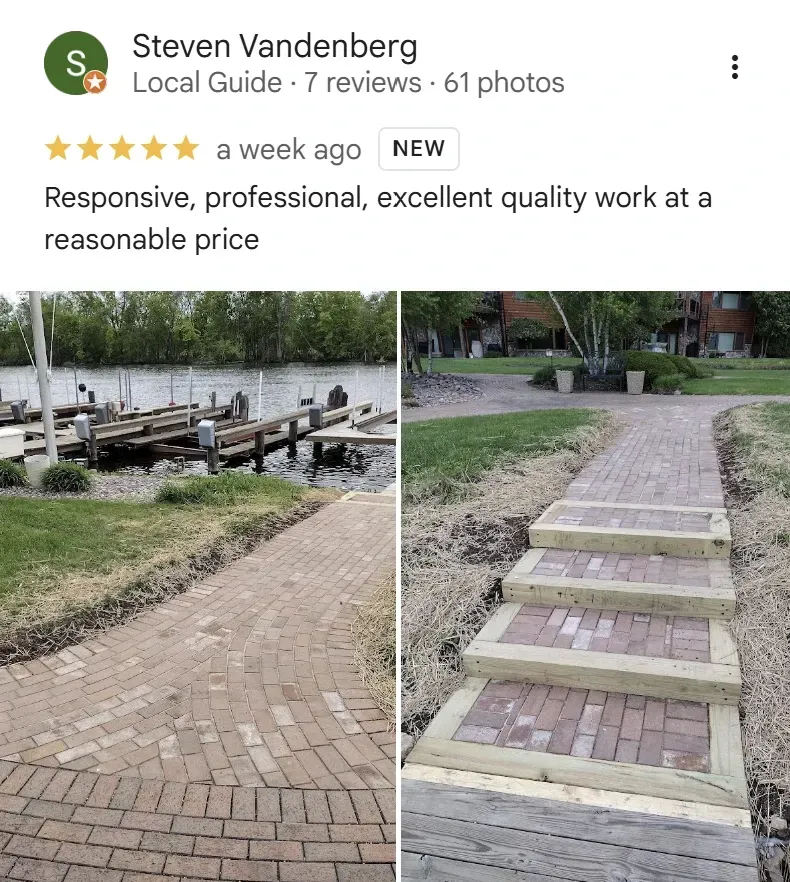


Ready to transform your outdoor space?
Trusted Local Team • Design and Build • Licensed and Insured • Year Round Service
From complete yard makeovers and hardscape installations to mowing and seasonal cleanups, we help Appleton homeowners get it done right. Call 920-250-8075 or submit the form below to get started.
Contact Us
That Back Corner Used to Be Part of the Yard
Land clearing means removing the brush, small trees, vines, weeds, and fallen wood that have taken over part of your property, so the ground can be used again. On a typical Appleton lot, that means volunteer saplings, tangled undergrowth, dead branches, and old brush piles. It isn't the same as trimming. Trimming knocks things back for a season, and then you're doing it all over again next year. Clearing goes after the growth itself, so the area stays open and becomes part of your yard again.
Every job looks a little different. A light job might be a fence line where brush has crept in a few feet each year. A bigger one might be a half acre behind the house that hasn't been touched since before you bought the place. Some properties just need the growth removed, and they're good to go. Others sit on a slope, and once it's open you might find the spot is better suited for a retaining wall that turns the hill into flat ground you can use. Our team at
Urban Renovations will tell you what you're looking at when we walk it with you.
Buckthorn Is Usually the Real Problem
If you live in the Fox Cities, there's a good chance the thick stuff in your yard is buckthorn. It's an invasive shrub that spreads fast, shades out almost everything under it, and hangs onto its green leaves long after everything else drops. Honeysuckle is usually right there with it. Both love edges, tree lines, and any spot that doesn't get mowed. A lot of homeowners don't even know what they're looking at. They just know the back of the yard keeps closing in.
The tricky part is that buckthorn doesn't quit when you cut it. If the stump and roots are left alone, it sends up a bunch of new shoots, and in a couple of summers it's thicker than before. That's why we don't just cut at the surface and call it done. We'll talk with you about how to handle the stumps and roots so the work actually holds. We'll also be honest that a little regrowth usually needs attention the next season, and that's normal.
Why Choose Urban Renovations?
The Urban Renovations Difference

- Dedicated Hardscape Crews: Our construction teams are specialized experts who focus solely on the engineering precision required to build lasting patios and walls.
- Engineered for Red Clay: Wisconsin soil destroys standard installs. We dig deeper and use specialized base materials to stabilize your project against frost heave.
- Authorized Unilock Contractor: As an authorized contractor, our work is rigorously vetted for quality and backed by industry-leading product warranties.
- 3D Design Visualization: Eliminate the guesswork. Our detailed 3D models let you see and tweak every feature of your new space before we break ground.
- Owner-Led Quality Control: You aren't just a number. Our owners are active on-site to ensure clear communication and strict adherence to the plan.
Keep the Trees You Like, Lose the Mess Under Them
Clearing doesn't have to mean wiping the place clean. A lot of people love the trees on their property. They just hate the jungle growing around the trunks. Big oaks and maples give you shade and privacy, and some of them were there long before the house was. Most of the time, the problem is everything crowding in underneath. Take that out, and the whole area feels bigger without feeling bare.
So before anything gets cut, we walk the property with you and mark what stays. Maybe you want to keep a natural tree line along the back for privacy. Maybe there's a big maple that would throw perfect afternoon shade over a future patio. Maybe you just want a path to the back of the lot again. Whatever it is, the plan should match how you want to use your property. We'd rather leave a tree you're unsure about than take out one you'll miss.
How We Handle a Clearing Job
It starts with a walk through. We look at what's growing, how big the area is, how we can get in, and what's nearby that needs protecting. That means fences, sheds, lawn you want to keep, and, on a lot of properties outside town, wells and septic systems. We pick equipment that fits your yard, not the biggest machine we can find. On a residential lot, control matters more than raw power.
Before any digging happens, utility lines get marked through Diggers Hotline. We'll also settle what happens to the brush and wood we take out, so nobody's guessing on clearing day. You'll get an itemized estimate that spells out the work before anything starts. The owner is on site, so you're not passing messages through three people to get an answer. If something changes once the ground is open, we'll tell you right away and work it out with you.
What the Ground Tells You Once It's Open
Once the brush is gone, you finally see the land. Low spots show up, and a slope that looked steep turns out to be gentle, or the other way around. You might find a wet area that stays soft for weeks after the spring thaw, or a spot where runoff has been cutting a path through the yard. You might also find you finally have room to drive back to the shed or pole barn. All of that tells you what the ground needs before it becomes whatever you want next.
Sometimes all it needs is a good cleanup so you can mow it like the rest of the yard. If it's going to be lawn, though, the grade usually needs smoothing first, so water moves the right way and the mower doesn't bounce. We put in new lawns too, so the cleared area can go straight to grass without waiting on another company. Not everything has to be decided right away. Seeing the ground is often what helps you decide.
Clearing Sets the Stage for the Outdoor Space You Actually Want
Here's the thing about overgrown ground. It's really hard to picture a new yard when you can't see past the brush. Once it's cleared, you can stand back there and see where the sun hits in the evening, how the space lines up with your back door, and how much room you really have. That's when ideas for landscaping start to make sense, like planting beds that soften a tree line or a clean edge where the lawn meets the woods. Clearing doesn't have to be the whole project. For a lot of people, it's the first step toward a yard that finally feels finished.
The same goes for outdoor living. A patio, a fire pit area, an outdoor kitchen, or a shaded spot under a pergola all need open ground and a clear way in for the crew that builds them. Because we design and build hardscaping too, we clear with that future project in mind. We think about where the patio might sit, which trees should frame it, and how equipment will get back there later without tearing up what's already done. That way the site doesn't get opened up twice. Clearing done with the end in mind saves you time, money, and a second mess.
Who You'll Be Working With
We're a locally owned company based in Waupaca, and we work throughout Appleton and the rest of the Fox Cities. We're licensed and insured, and we've been doing outdoor work for over a decade. Most of what we do is building landscapes and hardscapes, so we know what happens to the ground after the clearing is done. That's the part a lot of brush crews never see. We do, and it changes how we clear.
It means we pay attention to things that don't matter much until later. We notice which part of the yard should stay untouched, so it doesn't get packed down before a lawn goes in. We think about the path a future crew will use, so you don't lose a garden bed to tire ruts next spring. We also save the trees that will matter once the yard is finished, not just the ones that are easy to work around. Little calls like that are why we'd rather plan the clearing with you than just show up and cut.
Get A Free Quote Today!
Frequently Asked Questions
How much does land clearing cost?
The cost depends on how much growth there is, how big the area is, how easy it is to get to, and what you want the ground ready for afterward. A strip of brush along a fence line is a very different job than a half acre that hasn't been touched in 20 years. Thick buckthorn with lots of stumps takes more time than light weeds and young saplings. Hauling away brush and wood adds to the job, and so does smoothing the grade afterward. That's why we don't quote clearing over the phone. We'd rather walk the property with you and give you an itemized estimate that shows exactly what you're paying for. That way there are no surprises once the work starts.
When is the best time of year to clear land in Wisconsin?
Late fall through winter is often the easiest time to clear, but most jobs can be done in any season when the ground isn't soaked. With the leaves down, it's much easier to see what you're dealing with and decide what stays. Buckthorn actually stands out more in November, because it hangs onto its green leaves after almost everything else has dropped. Firm or frozen ground also means fewer ruts and less damage to the lawn around the work area. Spring thaw is usually the toughest stretch, since the ground around here can stay soft for weeks. If you're planning a lawn or patio for next year, clearing in the off season gets the hard part done early.
Will buckthorn grow back after it's cleared?
It can, if the stumps and roots are left in the ground. Buckthorn is stubborn. When it's cut, the stump sends up new shoots, and the area can fill back in thicker than it was before. Seeds already sitting in the soil can also sprout once sunlight hits the ground again. That's why we talk with you about how to handle the stumps and roots as part of the job, not as an afterthought. Even with good work, you should expect to pull or cut a few new shoots the next season. Catching them while they're small takes a few minutes. Letting them go for a couple of years is how the back of the yard closes in again.
Do I need a permit to clear land on my property?
For most backyard brush and small trees you usually don't, but there are a few exceptions worth checking. Properties near wetlands, streams, or lakes can fall under shoreland or wetland rules. Bigger jobs that involve a lot of grading or moving dirt may also need approval from your city, town, or county. Appleton alone sits in three counties, so the rules aren't always the same from one side of town to the other. If we see something on your property that looks like it could need a permit, we'll point it out before any work starts. It's always smart to check with your local municipality too, since they have the final word. The last thing you want is a fine for work that's already done.
What happens to the brush and trees after you clear them?
That gets settled before any work starts, so nobody is guessing on clearing day. The answer depends on how much material there is, what kind of growth it is, and what you'd like. Some people want everything gone. Others want to keep some firewood, or leave a small brush pile at the back of the lot for birds and rabbits. We'll go over the options with you during the estimate and put the plan in writing. The goal is to leave the area clean and ready for whatever you want to do with it next. If you already have a preference, just tell us at the start, and we'll build it into the job.
Ready to Get That Part of Your Yard Back?
If there's a section of your property you've stopped using, it's worth finding out what's under there. You don't need a plan before you call. Just tell us what's bothering you now and what you'd like to be able to do with the space. We'll walk it with you, look at the growth, the access, and the ground, and give you a straight answer. Sometimes the answer is simple, and sometimes it's the first step toward something bigger.
Give us a call or contact us to set up a free estimate. We'll go over what comes out, what stays, and what the ground needs once we're done. If a lawn, a landscape, or an outdoor living space is in the picture, we'll plan for it from the start. That way you end up with ground that's ready for what's next, not just a cleared patch of dirt. It's your yard, and you should be able to use all of it.