
Urban Renovations Blog
Beyond the Grill: Pizza Ovens and Smokers in Modern Outdoor Kitchens
Frank White • October 1, 2026 Urban Renovations | Appleton, WI | USA
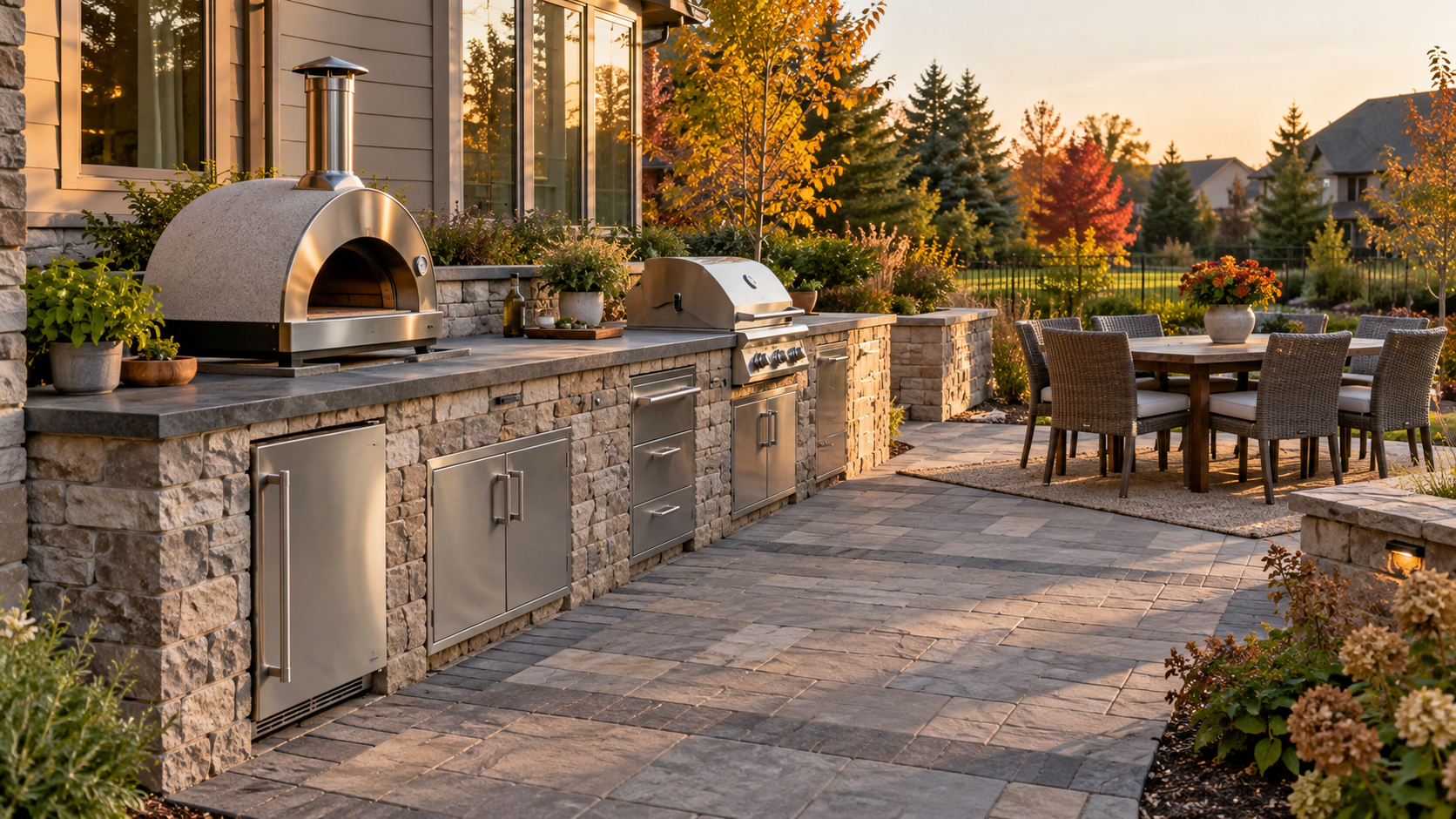
A grill handles burgers and quick weeknight meals, but it does not cover every kind of outdoor cooking. If you enjoy crisp pizza, slow-smoked meat, or meals that bring everyone outside for several hours, you may be considering a pizza oven, smoker, or both. These appliances need more planning than simply finding an open spot on the patio. Their heat, smoke, fuel, utilities, weight, clearances, counter space, and cleaning needs can affect the entire outdoor kitchen. We help Appleton homeowners plan cooking areas around the way they actually prepare food and entertain. Before you choose materials or finalize a patio, it helps to understand what each appliance needs and how it will fit into the larger backyard.
Can You Add a Pizza Oven or Smoker to an Outdoor Kitchen?
Yes, you can add a pizza oven or smoker to an outdoor kitchen if the selected appliance is approved for the intended setup and the design provides proper support, ventilation, clearances, utilities, and working space. Choose the appliance before finalizing counters, walls, utility routes, or surrounding materials. A portable gas pizza oven has different needs from a built-in oven or heavy masonry system. A smoker sold on its own cart should not be enclosed in an island unless its manufacturer specifically approves that installation. You also need room for food preparation, hot trays, long-handled tools, fuel, ash removal, and cleaning. Seating can remain close enough for conversation, but guests should not have to cross the active cooking area or stand where heat and smoke collect. If you are beginning with the larger patio plan, our hardscaping services can help you connect the cooking area with walkways, seating, drainage, and the rest of the yard.
What Does Each Appliance Add Beyond a Grill?
A grill, pizza oven, and smoker each support a different cooking style. You do not need every appliance to create a useful outdoor kitchen. The best choice is the one you will use regularly.
What Does a Pizza Oven Add?
A pizza oven creates a concentrated, high-heat cooking environment. Pizza is the obvious use, although some models can also handle approved cookware for bread, vegetables, meat, and other foods. Wood-fired ovens provide a hands-on cooking experience. You need room for dry fuel, fire tools, and ash removal, and you will spend more time controlling the fire. Gas models usually light faster and offer more direct heat adjustment, although cylinders or permanent fuel connections still need proper planning. Portable ovens, built-in gas units, modular systems, and site-built masonry ovens do not share one set of requirements. Weight, fuel, ventilation, operating space, and weather protection vary by model.
What Does a Smoker Add?
A smoker is designed for longer cooking sessions and smoke flavor. Because smoking can continue for many hours, the appliance should be positioned where you can check it without walking through the dining area or disturbing guests with smoke. Charcoal and wood smokers require active fire and airflow management. Pellet smokers feed fuel mechanically and usually need electricity. Electric smokers require suitable outdoor power, while gas models need an approved fuel arrangement. Think about more than temperature control. Fuel storage, grease cleanup, ash handling, door clearance, loading access, and protection from weather all affect how practical a smoker will be in your space.
What Does a Grill Still Do Best?
A grill remains the most practical choice for many everyday meals. It works well for direct cooking and foods that do not need the intense heat of a pizza oven or the long process of smoking. For many homeowners, the grill stays at the center of the outdoor kitchen while a pizza oven or smoker adds one specialized cooking option. That arrangement often works better than filling a small island with several appliances and leaving too little room to prepare or serve food.
Should You Choose a Pizza Oven, a Smoker, or Both?
Choose a pizza oven if you enjoy active, high-heat cooking and want pizza preparation to become part of the gathering. Choose a smoker if you regularly cook low and slow and are comfortable managing longer sessions. Choose both only if you have the space, budget, and interest to use both.
| Decision factor | Pizza oven | Smoker | Both |
|---|---|---|---|
| Main purpose | High-heat pizza and approved roasting | Slow cooking with smoke flavor | Wider range of specialized cooking |
| Cooking style | Shorter, active sessions | Longer, monitored sessions | Two separate cooking workflows |
| Fuel needs | Wood, gas, electricity, or multiple fuels | Wood, charcoal, pellets, gas, or electricity | More fuel storage or utility planning |
| Space needs | Support, prep area, and landing space | Stable placement and cleaning access | Larger work zone and wider circulation |
| Main placement concern | High heat and operating clearances | Smoke movement and long cooking times | Separation between appliances and guests |
If your outdoor plans also include a dedicated fire feature, review our guide to choosing between a fire pit and an outdoor fireplace. Planning the cooking and fire areas together can prevent smoke conflicts, crowded seating, and awkward walking routes.
Should Appliances Be Built In or Freestanding?
Built-in appliances can create a clean, permanent appearance, but the appliance must be listed or approved for built-in installation. A built-in model may require ventilation openings, an insulated jacket, access panels, or specific noncombustible surroundings. Freestanding equipment provides more flexibility. A smoker on its original cart can be moved for cleaning or storage, and a portable pizza oven can be removed when it is not being used. Freestanding does not mean the appliance can go anywhere. It still needs a stable location, proper clearance, and enough room to operate safely. It also should not block a walkway or sit where children, pets, or guests could bump it. We often find that a permanent prep counter beside a dedicated freestanding-appliance area gives homeowners a practical balance. You get an organized cooking station without enclosing equipment that was designed to remain open.
How Should Cooking, Prep, and Seating Areas Be Arranged?
Your cooking area should let you move between the appliance, counter, storage, and serving space without crossing the main path used by guests. You should be able to set down a hot tray immediately without reaching across a flame or carrying it through the seating area. A pizza station needs room for dough, toppings, flour, peels, and cutting. A smoker station needs space for seasoning, thermometers, wrapping, resting, and serving. Long tools, gloves, fuel, and cleaning supplies also need convenient storage. Smoke direction deserves careful attention. Wind can change, so we do not rely on one expected breeze to solve every placement concern. Doors, windows, seating, neighboring areas, and overhead structures should all be considered. Patio size matters too. Our article about expanding a small builder-grade patio explains why usable space and circulation should be planned before features are added.
What Safety, Support, and Utility Details Need Planning?
Start with the instructions for the exact appliance you want to install. Those instructions tell you where the appliance can be used, how much open space it needs, which surfaces can support it, and whether it can be placed in an enclosure. Ooni’s official manuals, guides, and dimensions resource is a useful example of why model selection comes first. Ooni lists separate manuals and dimensions for individual ovens because one product’s requirements should not be applied to another. The National Fire Protection Association’s grilling guidance also explains common outdoor cooking risks involving heat, grease, fuel, and hot coals. These general safety principles are useful, but the appliance manual and local requirements still control the installation.
Structural Support and Surface Stability
Pizza ovens and masonry surrounds can be heavy. The support system needs to account for the appliance, counters, veneer, stored items, and any other permanent loads. We do not use one footing or base detail for every kitchen because the correct approach depends on the equipment, site, soil, structure, and materials. Noncombustible finishes can be useful near cooking equipment, but they do not cancel the appliance’s clearance requirements. The materials behind a stone or masonry veneer also matter. Never assume that a pizza oven, smoker, or grill is safe beneath a pergola, roof, or awning. Confirm overhead use with the manufacturer before designing the structure around it.
Gas, Electricity, and Water
Gas and electrical work should be planned early and completed by qualified professionals. Extension cords and improvised gas connections should not become permanent solutions after the patio is finished. Pellet and electric smokers need properly located outdoor power. Gas appliances need an approved cylinder setup or permanent connection. If you want a sink, plan the water supply, drainage, shutoff access, and winterization before construction. Utility work becomes harder when it is treated as an afterthought. Choosing appliances early lets us reserve space and coordinate routes before the finished surfaces are installed.
Utility Locating Before Excavation
Before excavation begins, Wisconsin homeowners and contractors need to follow the safe-digging process. The Diggers Hotline homeowner guidance explains when to submit a locate request, how long to wait, and why utility markings must be respected. Public utility locating does not necessarily identify privately owned lines. Power running to a detached garage, landscape lighting, irrigation, propane lines, or other private facilities may require separate locating. This planning is especially important for outdoor kitchens because gas, electrical, water, drainage, and lighting routes can cross the same work area.
How Can an Outdoor Kitchen Be Prepared for Wisconsin Seasons?
A Wisconsin outdoor kitchen needs to handle rain, snow, freezing temperatures, spring thaw, and long periods between uses. Good seasonal planning starts with drainage, compatible materials, accessible utilities, and appliance placement. Water should not collect against the kitchen island, underneath appliances, or on counters. The patio and surrounding landscape need a clear drainage plan that keeps runoff away from the house and neighboring property. Portable ovens and smokers can be stored according to their manufacturers’ instructions. Built-in equipment may require approved covers, cleaning, inspection, and protection of openings or controls. A cover should only be placed over equipment after the appliance has cooled and when the manufacturer allows it. Pellets and firewood need dry storage. Grease and food residue should be removed before extended storage, and ashes must be completely cool before disposal. Water lines serving a sink also need a winter plan based on how the plumbing was designed.
What Affects the Cost and Complexity of the Project?
The full project cost depends on the kitchen size, appliances, counters, structural support, utility work, storage, lighting, drainage, patio construction, access, and finishing materials. The appliance price is only one part of the budget. A portable oven on an approved stand requires a different scope from a built-in oven supported by a masonry structure. A pellet smoker near properly installed outdoor power may be easier to accommodate than a cooking area requiring new gas, electrical, water, and drainage connections. Site access also matters. Equipment movement, excavation, material delivery, grade changes, and connections to an existing patio can all affect the work. Select your appliances before requesting final construction proposals. Written estimates should clearly identify the assumed models, included utility work, support requirements, materials, site restoration, and exclusions. That makes it easier to compare equivalent work instead of comparing totals that cover different scopes.
How Does 3D Planning Help With an Outdoor Kitchen?
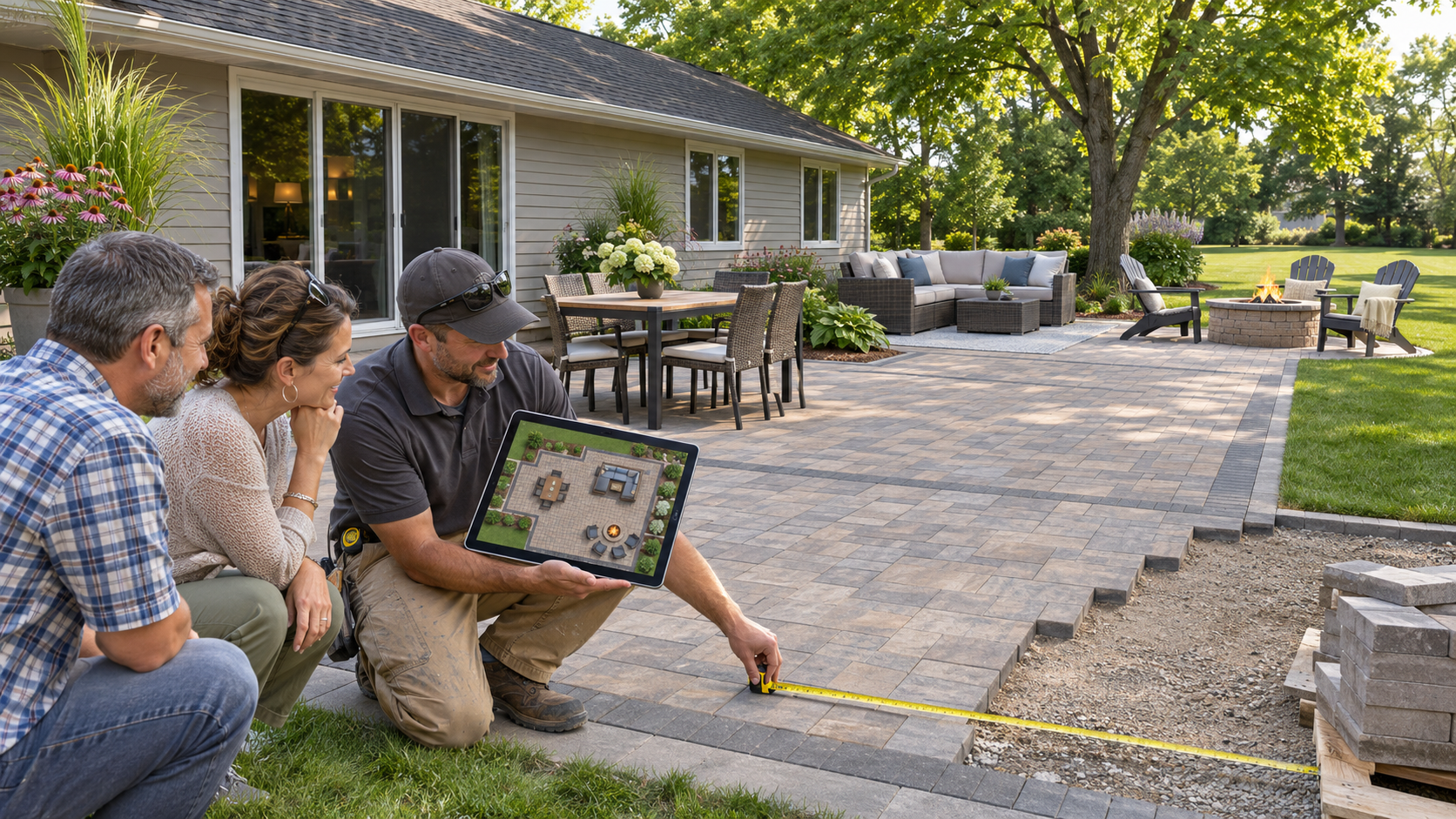
We use 3D planning to help you see how the outdoor kitchen fits into the patio before construction begins. It can show whether the counters overwhelm the space, whether stools block a walkway, or whether the cook becomes separated from the seating area.
For this type of project, the value is not simply seeing colors on a screen. The model helps us discuss the working relationship between appliances, landing space, storage, dining, and circulation. It is much easier to move a counter or widen a walkway during design than after the patio is installed.
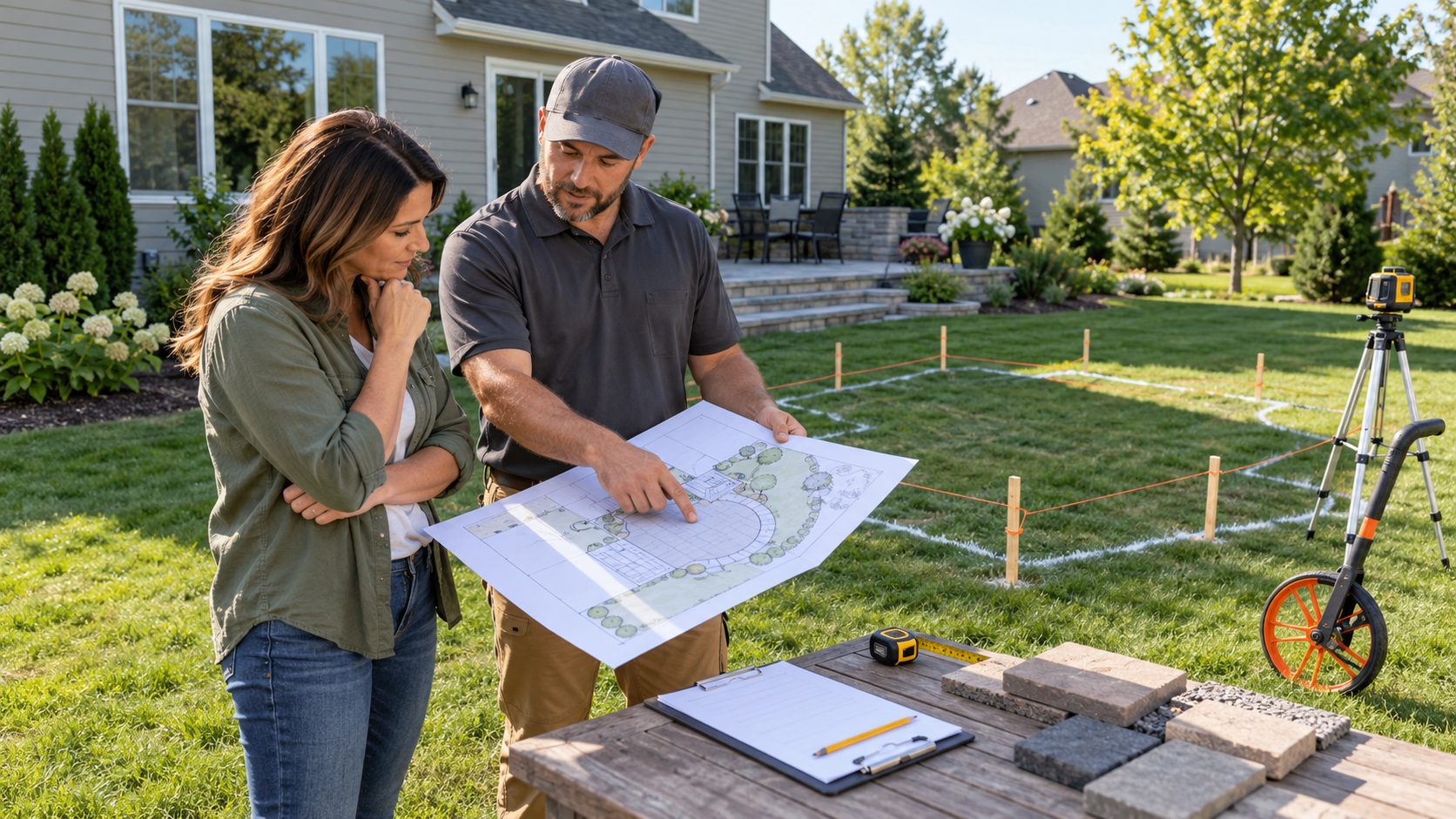
Our article about using 3D rendering for hardscape planning explains the process in more detail. A rendering helps you evaluate the design, but it does not replace field measurements, appliance manuals, engineering, or construction details.
Why Choose Urban Renovations for Your Appleton Outdoor Kitchen?
We are locally owned, fully insured, and a Unilock Authorized Contractor with more than a decade of hardscaping experience. We design outdoor kitchens as complete living spaces, not isolated islands placed wherever room happens to be available. Our planning considers the patio, drainage, base, counter layout, appliance support, walking routes, seating, and connection to the rest of your yard. We also help you think through how the space will work during everyday meals, larger gatherings, and Wisconsin’s changing seasons. If you are ready to focus on the cooking area, you can explore our outdoor kitchen design and installation services. We will help you build the plan around your property and the way you actually cook.
Frequently Asked Questions
Can a freestanding pizza oven be built into an outdoor kitchen?
A freestanding pizza oven should not be enclosed or converted into a built-in appliance unless the manufacturer expressly approves that type of installation. Adding walls, cabinetry, countertops, or a roof around the appliance can change ventilation, heat movement, operating access, and required clearances from combustible materials. It may also interfere with controls, fuel connections, maintenance, or warranty conditions. A safer design may use a dedicated noncombustible counter or manufacturer-approved stand while preserving the open space specified in the installation manual. Select the exact oven model before designing the surrounding kitchen. The appliance’s current documentation, fuel requirements, weight, and listed installation options should guide the layout instead of measurements or clearances taken from another pizza oven.
How much counter space does a pizza oven or smoker need?
There is no universal amount of counter space because appliance dimensions, door direction, cooking tools, fuel, and preparation habits vary. Plan enough landing space to place hot pans, trays, and cooked food nearby without reaching across flames or carrying them through a busy walkway. A pizza station may require space for dough, toppings, flour, peels, cutting boards, and turning tools. A smoker station may need room for seasoning, thermometers, wrapping materials, utensils, and resting cooked food. Consider where raw and finished foods will be handled and whether more than one person will cook at a time. The selected appliance, household cooking routine, kitchen shape, and safe circulation space should determine the final counter dimensions.
Can an outdoor smoker be used under a pergola?
Do not assume that a smoker is safe to use beneath a pergola, roof, awning, or other overhead structure. The answer depends on the appliance manufacturer’s instructions, fuel type, required overhead and side clearances, heat output, smoke movement, ventilation, and the materials used in the structure. Some smokers are intended only for uncovered outdoor use, even when the surrounding area appears open. Smoke and heat can collect beneath a roof, while grease deposits may create additional maintenance and fire concerns. Before choosing the location, review the current manual for the exact smoker and confirm any applicable fire, building, property, and insurance requirements. Never operate a smoker in an enclosed area, garage, or other space where combustion gases can accumulate.
Which smoker type is easiest to include in an outdoor kitchen?
Pellet, electric, and gas smokers may offer more direct temperature controls than traditional charcoal or wood-burning models, but no smoker type is automatically the easiest choice for every outdoor kitchen. Pellet and electric units require suitable power, weather-conscious outlet placement, ventilation, and access for cleaning or component replacement. Gas smokers need an approved fuel arrangement and properly completed connections. Charcoal and wood smokers require space for dry fuel storage, ash removal, airflow management, and active fire control. Size, weight, door swing, loading method, smoke direction, and maintenance access also affect placement. The most practical smoker is one that fits the available utilities, preferred cooking style, storage plan, maintenance expectations, and manufacturer-approved installation conditions.
Should a pizza oven or smoker be selected before the patio is built?
Yes, selecting the intended pizza oven or smoker before the final patio and outdoor kitchen design is usually the most practical approach. The appliance’s dimensions, weight, fuel source, electrical needs, ventilation, operating clearances, access panels, door direction, smoke, and heat can influence the entire layout. Early selection also helps position prep counters, seating, storage, utilities, pathways, and fire-resistant surfaces correctly. It allows the project team to determine whether special support or dedicated utility planning may be required. If the exact model has not been selected, the design should preserve flexibility and avoid relying on assumed dimensions. Generic measurements may not accommodate the eventual appliance or satisfy its manufacturer’s installation and safety requirements.
Plan an Outdoor Kitchen Around the Way You Cook
A pizza oven or smoker can expand what you cook outside, but it should fit the patio, utilities, safety needs, and way your household uses the backyard. To discuss appliance placement, counters, drainage, materials, and 3D planning, contact Urban Renovations or call 920-250-8075.
Follow our social media pages below:
About Urban Renovations
Urban Renovations is Central Wisconsin’s one stop team for hardscaping and landscaping, built around clean craftsmanship and a smooth experience from start to finish. They handle everything from paver patios, retaining walls, pergolas, and outdoor kitchens to grading, lawn installation, planting, and drainage that keeps your yard looking right and working right. Their 3D design process helps homeowners see the plan before work begins, so decisions feel confident and surprises stay off the jobsite. From the first conversation to the final walkthrough, their crew keeps communication clear, timelines realistic, and results built to last.

Ready to transform your outdoor space?
Trusted Local Team • Design and Build • Licensed and Insured • Year Round Service
From paver patios and retaining walls to new lawns and land clearing, we help Appleton homeowners get it done right. Call 920-250-8075 or submit the form below to get started.
Contact Us
Ready to Upgrade Your Outdoor Space?
If you are thinking about a new patio, retaining wall, pergola, or a fresh lawn install, our team is here to help you plan it right and build it to last. Reach out to Urban Renovations to talk through your goals, get expert guidance, and take the next step toward a clean, functional outdoor space you will enjoy for years.
Follow Us
Get A Free Quote Today!