


Urban Renovations Blog
The Ecological Driveway: Why Appleton Homeowners Are Choosing Permeable Grid Systems
Frank White • September 12, 2026 Urban Renovations | Appleton, WI | USA
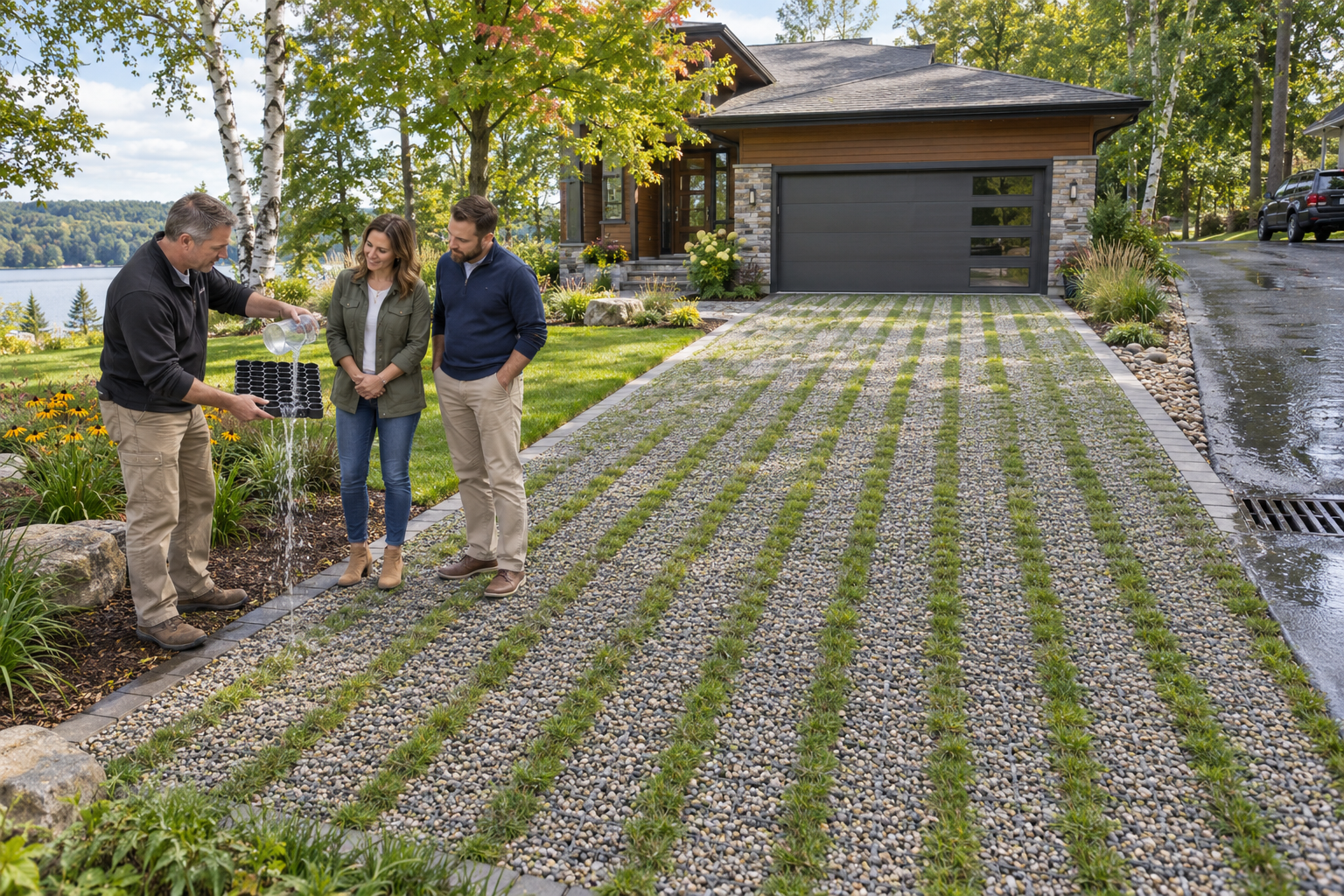
What if your driveway could support everyday vehicle traffic while allowing rain and melting snow to move through the surface instead of immediately running toward the street? For homeowners dealing with puddles, migrating gravel, mud, erosion, or drainage concerns, a permeable grid driveway may offer a practical alternative to conventional pavement. Interest in permeable systems is growing because they combine aggregate with a structural grid and a carefully prepared base. Instead of covering the property with another completely impervious surface, the system creates openings through which water can enter the underlying aggregate layers. That water may then infiltrate suitable soil, enter an underdrain, or move toward a planned outlet.
These driveways are not simply loose gravel placed over plastic cells. Excavation, soil conditions, base depth, aggregate selection, grading, drainage, expected vehicle loads, and installation quality all affect performance. Wisconsin winters make these details even more important, so homeowners in Appleton and Waupaca should understand both the benefits and limitations before choosing this type of driveway.
What Is a Permeable Driveway?
A permeable driveway is designed to let rainwater and snowmelt pass through openings in the driving surface. Rather than becoming immediate surface runoff, water enters layers of stone beneath the driveway, where it can be temporarily stored and managed. Permeable driveways can take several forms, including permeable interlocking concrete pavers, porous pavement, and aggregate-filled grid systems. The U.S. Environmental Protection Agency includes permeable pavement among the green infrastructure practices that can help manage rainfall closer to where it lands.
In a grid driveway, interconnected structural cells contain compatible aggregate and distribute vehicle loads across the surface. Beneath the grid is a prepared aggregate base that supports the driveway while creating spaces where water can move. Depending on the site, the system may allow infiltration into the soil or direct water toward a drainage outlet.
How Does a Permeable Grid Driveway Work?
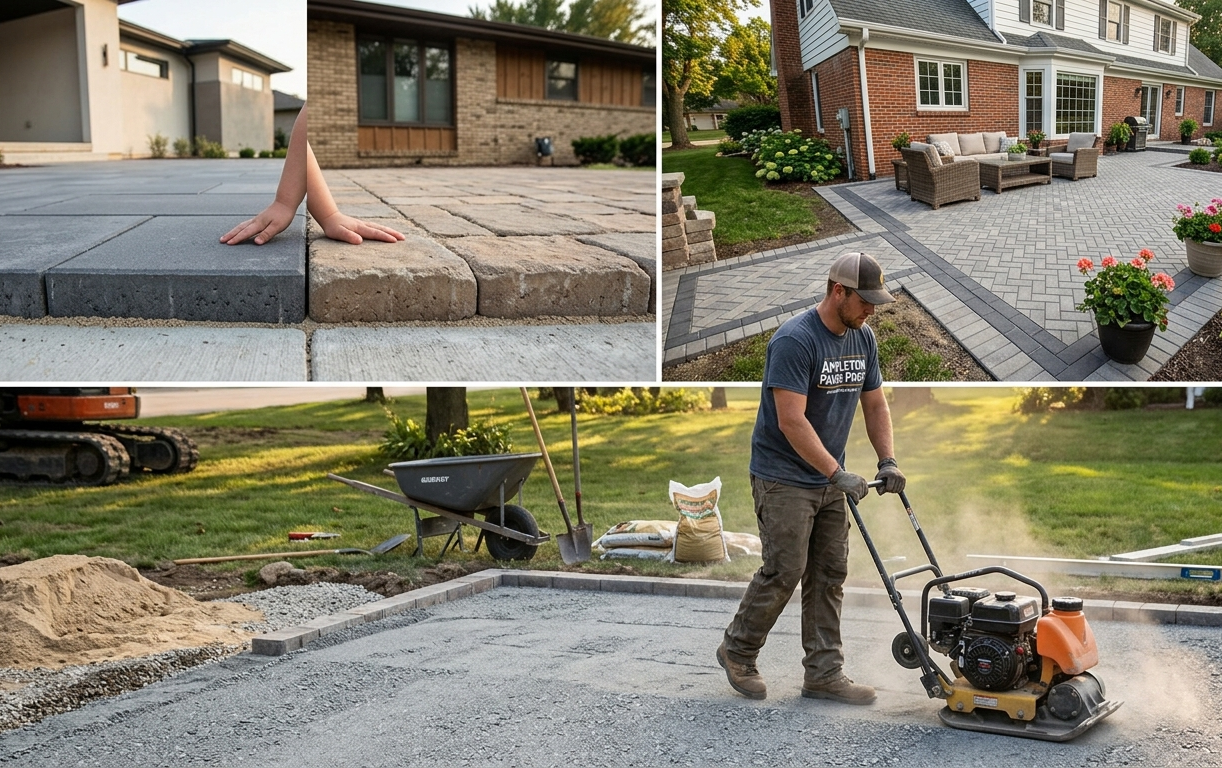
A permeable grid system works as a series of connected layers rather than as a single surface material. The visible aggregate and structural grid form the driving surface, but much of the driveway’s performance comes from the preparation underneath. Installation generally begins with evaluating the soil, slope, existing drainage, and intended use of the driveway. Unsuitable material is excavated, and a base is created using aggregate selected for structural support and water movement. The grid is then installed according to the manufacturer’s requirements and filled with compatible stone.
When rain reaches the driveway, water passes through the aggregate-filled cells and enters the stone reservoir below. If the underlying soil has adequate infiltration capacity, some of that water can gradually soak into the ground. Where soil conditions are less suitable, an underdrain or controlled outlet may be needed. This layered construction is why drainage must be considered before the grid is installed. A permeable surface cannot compensate for an inadequate base, unstable soil, poor grading, or water that is being directed toward the driveway from the surrounding property.
Is a Permeable Grid Driveway the Same as a Gravel Driveway?
A permeable grid driveway and a traditional gravel driveway may look similar, but they are not the same system. A conventional gravel driveway relies on its aggregate gradation, compacted base, crown, grading, and drainage features to remain stable. A grid driveway adds a cellular structure that helps contain the surface stone and distribute loads. The grid can reduce some of the gravel movement, rutting, and spreading that may occur on a loose aggregate surface. However, it does not eliminate the need for excavation, compaction, drainage planning, or maintenance. Placing grid panels directly over an unstable driveway will not correct deep settlement, soft soil, or existing drainage problems.
Homeowners comparing these options can learn more about the underlying construction principles in our guide to the anatomy of a properly graded gravel driveway. The right choice depends on property conditions, traffic, appearance, drainage goals, budget, and maintenance expectations.
Why Are Homeowners Considering Permeable Driveways?
One of the main reasons homeowners consider permeable driveways is stormwater management. Standard asphalt and concrete generally move water across the surface, where it must travel toward a lawn, street, ditch, catch basin, or another drainage point. If the grade is poor or the drainage system is overwhelmed, that runoff may contribute to puddles, erosion, or water collecting near buildings. A permeable surface changes how water enters and moves through the property. Instead of sending nearly all precipitation across the driveway, the system lets water pass into the aggregate below. This may reduce the volume and speed of runoff leaving the driveway during ordinary rainfall.
Grid systems can also help stabilize the appearance and function of an aggregate driveway. By holding stone within individual cells, the grid may reduce material spreading into lawns or gathering in tire paths. This can be especially valuable on driveways where loose gravel frequently shifts because of turning vehicles, snow removal, or repeated traffic.
Are Permeable Driveways Better for the Environment?
Permeable driveways can provide environmental benefits because they reduce the amount of impervious surface on a property. When rainfall travels over conventional pavement, it can collect soil, oil, fertilizers, and other materials before entering a storm drain or nearby waterway. Allowing water to enter the ground closer to where it falls can reduce some of this surface movement. The EPA identifies permeable pavement as a green infrastructure practice that may help reduce runoff and filter certain pollutants. It can also become part of a broader landscape plan that includes appropriate grading, vegetation, rain gardens, and other drainage features.
However, an ecological driveway is not free of environmental impact. Grid products and aggregates still need to be manufactured, transported, and installed. Excavation may disturb the site, and the driveway will only manage water effectively if it is designed for the actual soil and drainage conditions. Its environmental value comes from thoughtful stormwater management, not simply from attaching an eco-friendly label to the material.
Can a Permeable Driveway Reduce Puddles and Mud?
A properly designed permeable driveway can reduce surface ponding by giving water a route through the driving surface. It may also help prevent the loose, muddy conditions that develop when water collects in low areas and weakens the driveway base. Permeability alone does not make a driveway puddle-proof. Sediment can clog the surface, surrounding slopes can direct excessive runoff onto the driveway, and compacted or poorly draining soil can limit infiltration. Frozen ground may also affect how quickly water can leave the aggregate reservoir during winter and early spring.
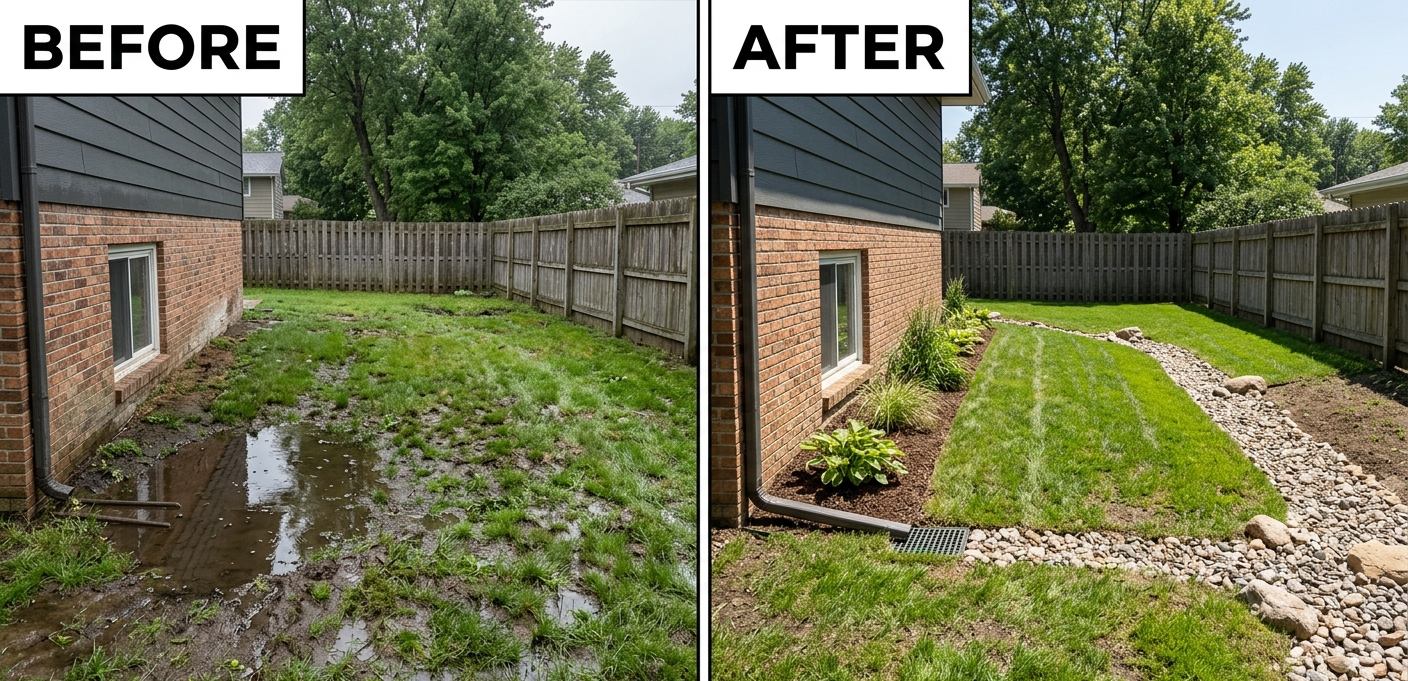
Drainage must therefore be evaluated across the entire property. Downspouts, garage elevations, lawn grades, retaining walls, planting beds, and neighboring surfaces can all affect how water reaches the driveway. Our article about grading a landscape to address drainage problems explains why surface materials and surrounding grades need to work together.
Do Permeable Driveways Work During Wisconsin Winters?
Permeable driveways can work in cold climates, but they need to be designed with freezing temperatures, snow accumulation, snowmelt, and repeated freeze-thaw cycles in mind. Moisture trapped in a poorly designed base can contribute to movement, loss of strength, and frost-related damage. The Federal Highway Administration emphasizes the importance of drainage and moisture control in pavement systems exposed to freezing conditions. Coarse, free-draining aggregate can help limit capillary movement and give water somewhere to travel, but the appropriate base design depends on the site.
Homeowners should not assume that a permeable driveway is immune to frost heave simply because water can pass through its surface. Soil type, frost depth, aggregate thickness, compaction, groundwater conditions, and the availability of an outlet all influence winter performance. These considerations are particularly relevant in Appleton and Waupaca, where a driveway must handle heavy snow, changing temperatures, and spring thaw in addition to summer rain.
What Happens When the Ground Freezes?
Frozen soil can temporarily reduce the rate at which water infiltrates beneath a permeable driveway. The aggregate reservoir may continue to provide temporary storage, but the water still needs a safe route through or away from the system. Conditions will vary depending on frost depth, soil composition, drainage features, groundwater, temperature changes, and the amount of incoming snowmelt. A driveway built only around summer rainfall may struggle when melting snow reaches a partially frozen site.
The practical lesson is that permeable driveway design cannot stop at the surface. The installer needs to understand where the water can go when the soil is frozen or already saturated. Depending on the property, that may involve additional aggregate storage, an underdrain, a controlled overflow route, or grading that carries excess water safely away from the home.
Does a Permeable Driveway Still Need Drainage?
A permeable driveway may still require a drainage system. The word “permeable” describes how water enters the surface, but it does not guarantee that the soil beneath the driveway can absorb an unlimited amount of water. Some Appleton properties contain clay-rich soils that accept water slowly, while other lots may have slopes, nearby foundations, high groundwater, or limited areas where water can safely go. Waupaca properties can present different conditions, including larger rural driveways, rolling terrain, or areas near lakes and wetlands. These factors must be assessed individually rather than addressed with one standard installation method.
An underdrain may be used to collect water from the stone reservoir and carry it toward an approved outlet. The design should also include a safe overflow path for storms that deliver more water than the system can temporarily store. Permeable pavement is a drainage tool, but it does not replace complete drainage planning.
What Type of Gravel Is Used in a Permeable Grid System?
The correct aggregate depends on the grid product and the function of each driveway layer. The stone placed inside the grid may have different specifications from the aggregate used in the structural base or water-storage layer. Clean, open-graded aggregate is commonly used in areas where water needs to move through the system. This type of stone contains fewer fine particles that could settle into open spaces and restrict drainage. Angular aggregate can also interlock more effectively than rounded stone, which tends to roll and shift under vehicle traffic.
Homeowners should avoid choosing gravel based solely on appearance or price. The material needs to be compatible with the grid, expected vehicle loads, drainage design, and manufacturer’s installation requirements. Urban Renovations evaluates these factors as part of gravel driveway installation in Appleton, whether the project involves a conventional aggregate surface or a more structured permeable option.
Are Permeable Grid Driveways Suitable for Sloped Properties?
Permeable grid systems can work on some sloped properties, but the grade must fall within the limitations of the selected product and overall design. Steeper slopes create additional challenges because both water and aggregate naturally move downhill. Runoff from higher areas can also place more demand on the driveway than rainfall falling directly onto its surface. If a hillside, roof, or neighboring section of the property sends water toward the driveway, that additional volume should be considered during planning.
Some grid products have maximum slope recommendations or require special anchoring and edge restraint. The direction of vehicle travel, frequency of turning, snow removal practices, and possible erosion at the lower edge also matter. A site evaluation is especially important on sloped properties because a poorly managed driveway can transfer water and sediment to the lawn, street, garage, or neighboring land.
Can Snow Be Plowed From a Permeable Grid Driveway?
Many permeable grid systems can accommodate snow removal, but plowing should follow the product manufacturer’s instructions. The appropriate method depends on whether the grid sits slightly below the finished aggregate, how well the surface has settled, and whether any grid edges are exposed. Plow shoes or a slightly raised blade may help prevent the equipment from catching the surface or pushing excessive aggregate into the lawn. Operators should also know where the driveway edges, drainage outlets, and transitions are located before snow covers them.
Snow storage deserves attention as well. Large piles should not be placed where meltwater will flow toward the garage or overwhelm one section of the driveway. Thinking about winter maintenance during the design stage can protect the grid, preserve the aggregate, and reduce drainage problems during spring thaw.
How Much Maintenance Does a Permeable Driveway Need?
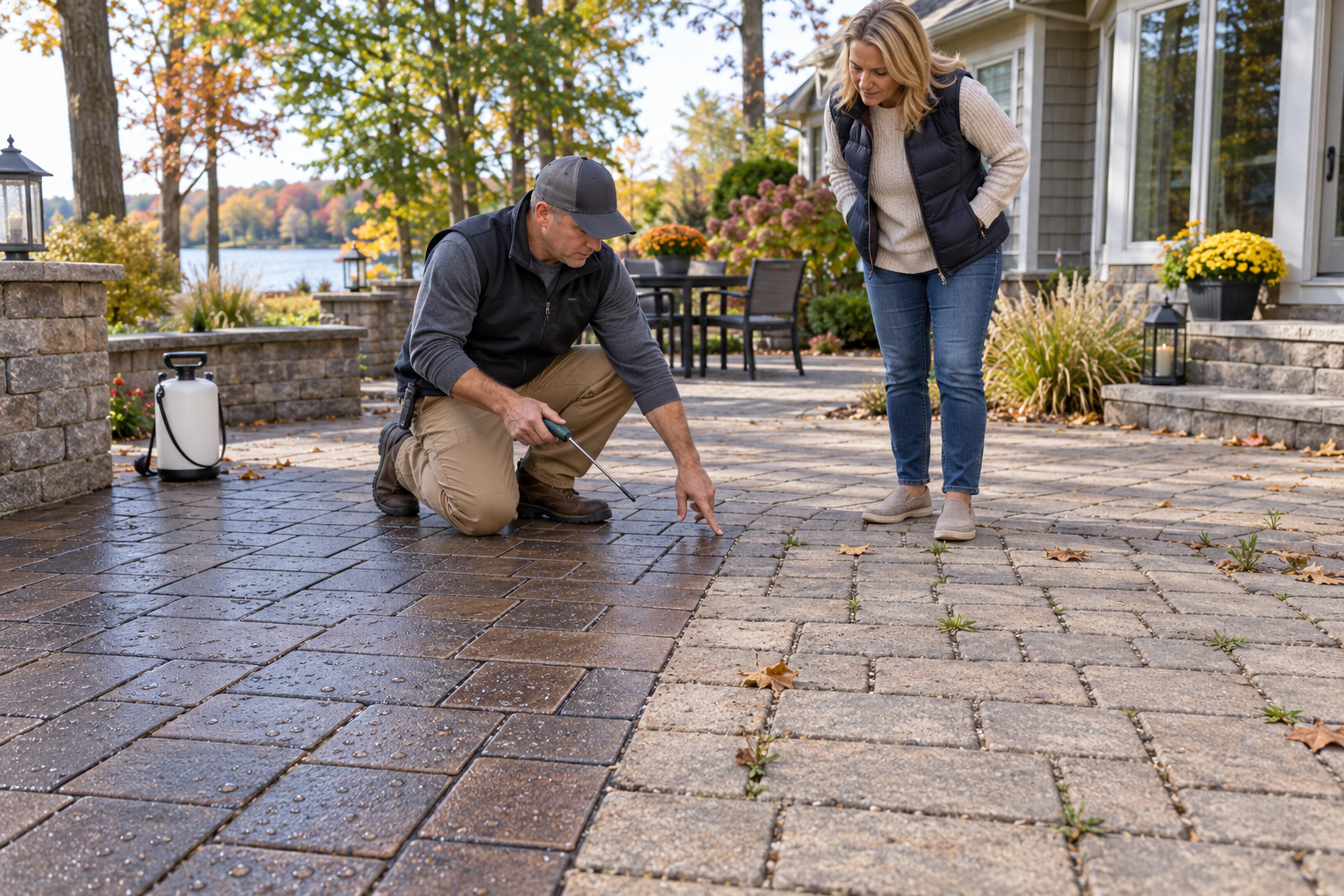
Permeable driveways require routine maintenance to keep water moving through the surface. Leaves, soil, mulch, grass clippings, and fine sediment can settle into the openings and gradually reduce permeability. Regular care may include removing organic debris, checking for sediment buildup, replenishing displaced aggregate, controlling weeds, and watching for areas where water has started to drain more slowly. The driveway should also be inspected after major storms, snow removal, or heavy vehicle use.
The surrounding landscape can influence how quickly the surface clogs. Bare soil or loose mulch positioned uphill from the driveway may wash onto it repeatedly. Correcting that source is often more effective than continually cleaning the driveway. Maintenance is manageable when it is included in the ownership plan, but a permeable surface should not be promoted as a maintenance-free product.
Permeable Grid Driveways vs Traditional Gravel
Both systems can provide a practical and attractive residential driveway, but they manage the surface aggregate differently. Traditional gravel relies on a well-compacted base, suitable stone, proper grading, and periodic maintenance. A grid system adds a cellular layer that helps keep the surface material within defined spaces. Traditional gravel may have a lower initial cost and can be relatively straightforward to regrade or replenish. A permeable grid adds material and installation requirements, but it may provide greater surface stabilization in areas where gravel tends to migrate or develop tire ruts.
The best option depends on how the driveway will be used. A long rural driveway that regularly carries trucks or equipment may have different requirements from a shorter residential driveway used mainly by passenger vehicles. Drainage goals, desired appearance, winter maintenance, slope, soil, and available budget should all guide the decision.
Permeable Grid Driveways vs Asphalt or Concrete
The main difference between permeable grids and conventional asphalt or concrete is the way each surface handles water. Standard pavement generally sends water across the driveway, which means grading and surface drainage must direct it toward an appropriate outlet. Permeable grids allow water to pass through the surface into aggregate layers below. That difference does not make one material ideal for every property. Asphalt and concrete provide smoother, solid surfaces that some homeowners prefer for walking, shoveling, accessibility, or appearance. Grid driveways offer a more natural aggregate look and may support on-site stormwater management, but they need cleaning and occasional aggregate maintenance.
Cost, expected traffic, snow removal, drainage, soil conditions, driveway length, and long-term maintenance should be compared as a complete system. Evaluating only the visible surface can overlook the excavation, base construction, drainage work, and preparation that determine how well any driveway performs.
How Long Does a Permeable Grid Driveway Last?
There is no universal lifespan that applies to every permeable grid driveway. Longevity depends on the grid material, base construction, drainage, soil stability, aggregate, traffic, installation quality, maintenance, and compliance with manufacturer requirements. A driveway used by passenger vehicles may experience less stress than one supporting delivery trucks, trailers, construction equipment, or recreational vehicles. Turning areas and garage entrances may also receive more concentrated loads than straight sections.
The base remains one of the most important factors. If it settles unevenly or loses strength because of uncontrolled moisture, the grid above it may shift or deform. If fine sediment clogs the surface, the driveway may also lose some of its drainage performance. Long-term value should be designed into the entire installation rather than estimated from the grid product alone.
How Much Does a Permeable Grid Driveway Cost?
A permeable grid driveway may cost more upfront than a basic gravel driveway, but no single price applies to every property. Driveway size, excavation depth, existing surface removal, soil conditions, aggregate availability, base requirements, drainage features, grid selection, site access, and labor all affect the final estimate. Homeowners should compare complete scopes of work rather than looking only at the price of grid panels or surface stone. A proper proposal may include excavation, grading, geotextile where appropriate, multiple aggregate layers, compaction, drainage, grid installation, infill, edge restraints, and restoration of disturbed areas.
A low estimate may leave out important base or drainage work, creating repair costs later. Our discussion of how Wisconsin soil affects hardscape pricing explains why preparation often matters more than the material visible on the finished surface.
Why Choose Urban Renovations?
Urban Renovations brings more than a decade of hardscaping and outdoor construction experience to projects throughout Appleton, the Fox Valley, and Waupaca. We understand that a durable driveway begins below the finished surface, which is why excavation, base preparation, drainage, grading, aggregate selection, and transitions to surrounding areas receive careful attention. Our team evaluates how vehicles will enter, turn, park, and leave the property. We also consider where stormwater currently travels, how the surrounding landscape affects the driveway, and what level of maintenance the homeowner is comfortable performing. These details help determine whether a permeable grid system, traditional gravel driveway, or another surface is the most practical option.
As a Unilock Authorized Contractor, we bring certified installation knowledge to paver and hardscape projects. We also offer 3D visualization when it can help homeowners understand how planned surfaces and landscape features will fit together.
Frequently Asked Questions About Permeable Driveways
Can heavy vehicles drive on a permeable grid driveway?
Heavy vehicles can use some permeable grid driveways when the entire system is designed for the expected load. Every grid product has specific strength ratings, but the grid is only one part of the installation. The soil, aggregate base, excavation depth, compaction, drainage, and frequency of vehicle use all affect whether the driveway can safely support trucks, trailers, recreational vehicles, or equipment. Occasional delivery traffic may create different demands from daily heavy vehicle use. Before installation, tell the contractor which vehicles will regularly enter the property so the grid and base can be selected and constructed accordingly.
Can leaves and sediment clog a permeable driveway?
Leaves and sediment can clog a permeable driveway if debris is allowed to break down and collect within the surface openings. Whole leaves are usually easy to remove, but decomposed organic matter, soil, mulch, and fine aggregate can gradually settle into the voids that allow water to pass through. Regular sweeping, blowing, or other manufacturer-approved cleaning helps preserve drainage performance. The surrounding landscape should also be evaluated because bare soil or mulch washing downhill can repeatedly contaminate the surface. If water begins ponding where it previously drained, the driveway should be inspected and cleaned before the problem becomes more difficult to correct.
Can deicing salt be used on a permeable grid driveway?
Deicing salt may be permitted on some permeable grid systems, but homeowners should follow the recommendations of both the grid and aggregate manufacturers. The surface material, nearby vegetation, groundwater conditions, drainage outlet, and amount of salt used can all affect whether it is appropriate. Because melted snow passes through the driveway, dissolved deicing material can travel into the aggregate layers and potentially into the surrounding soil or drainage system. Mechanical snow removal, traction aggregate, or reduced salt application may be preferable in some situations. The safest approach is to choose a winter maintenance plan during the driveway design process rather than after ice develops.
Can a permeable grid keep gravel from spreading into the lawn?
A permeable grid can help reduce gravel spreading by holding aggregate within a network of structural cells. This added containment may limit the movement caused by tires, turning vehicles, foot traffic, and ordinary surface use. However, the grid does not completely eliminate displacement. Correct infill depth, edge restraints, driveway transitions, snowplowing practices, and periodic maintenance still matter. Aggregate can be pushed beyond the driveway if a plow blade is set too low or if exposed edges are not properly supported. When the surface and perimeter are installed correctly, a grid system generally provides more control than unsupported loose gravel.
Are permeable driveways suitable near a garage or foundation?
Permeable driveways can be installed near garages and foundations when grading, drainage, and overflow routes are carefully planned. Water should never be allowed to collect against the building simply because the driveway surface is permeable. The contractor needs to evaluate garage floor elevation, foundation walls, soil conditions, downspouts, surrounding grades, and where water will travel after entering the aggregate base. An underdrain or another controlled outlet may be needed if infiltration close to the structure is not appropriate. The driveway should also include a safe overflow route for intense storms or frozen conditions so excess water moves away from the building.
Can part of a damaged permeable driveway be repaired?
Localized repairs may be possible when damage is limited to a particular part of the permeable driveway. Individual grid sections, displaced aggregate, damaged edge restraints, or small settled areas may sometimes be corrected without rebuilding the entire surface. However, the cause of the problem must be identified before repair work begins. Settlement may indicate an inadequate base, poor compaction, unstable soil, uncontrolled water, or vehicle loads beyond the system’s design. Replacing only the visible grid without correcting the underlying issue may result in repeated damage. A professional inspection can determine whether a targeted repair is appropriate or whether a larger section needs reconstruction.
Final Thoughts
A permeable grid driveway can give homeowners a more structured way to combine an aggregate surface with stormwater management. By allowing water to enter the driveway instead of immediately flowing across it, the system may reduce runoff, support drainage goals, and help control loose gravel. Its success, however, depends on much more than the grid visible at the surface. Soil, slope, base depth, aggregate, traffic, drainage, snow removal, and maintenance all influence long-term performance. Wisconsin’s freeze-thaw conditions make careful design especially important, and not every property will need the same solution.
For homeowners in Appleton, with Waupaca as a secondary service area, the best starting point is a site-specific evaluation. A truly ecological driveway is one that manages water responsibly while providing a stable, practical surface suited to the property and the people who use it.
Explore a Smarter Driveway for Your Property
Wondering whether a permeable grid system would work for your driveway? Contact Urban Renovations to discuss your soil, drainage, vehicle use, and maintenance expectations. Our team can evaluate the property and help you compare permeable grids, conventional gravel, and other practical driveway options.
Follow our social media pages below:
About Urban Renovations
Urban Renovations is Central Wisconsin’s one stop team for hardscaping and landscaping, built around clean craftsmanship and a smooth experience from start to finish. They handle everything from paver patios, retaining walls, pergolas, and outdoor kitchens to grading, lawn installation, planting, and drainage that keeps your yard looking right and working right. Their 3D design process helps homeowners see the plan before work begins, so decisions feel confident and surprises stay off the jobsite. From the first conversation to the final walkthrough, their crew keeps communication clear, timelines realistic, and results built to last.

Ready to transform your outdoor space?
Trusted Local Team • Design and Build • Licensed and Insured • Year Round Service
From complete yard makeovers and hardscape installations to mowing and seasonal cleanups, we help Wisconsin homeowners get it done right. Call 920-250-8075 or submit the form below to get started.
Contact Us
Ready to Upgrade Your Outdoor Space?
If you are thinking about a new patio, retaining wall, pergola, or a fresh lawn install, our team is here to help you plan it right and build it to last. Reach out to Urban Renovations to talk through your goals, get expert guidance, and take the next step toward a clean, functional outdoor space you will enjoy for years.
Follow Us
Get A Free Quote Today!