
Urban Renovations Blog
The “Low-Mow” Revolution: Reducing Lawn Size With Strategic Hardscaping
Frank White • October 8, 2026 Urban Renovations | Appleton, WI | USA
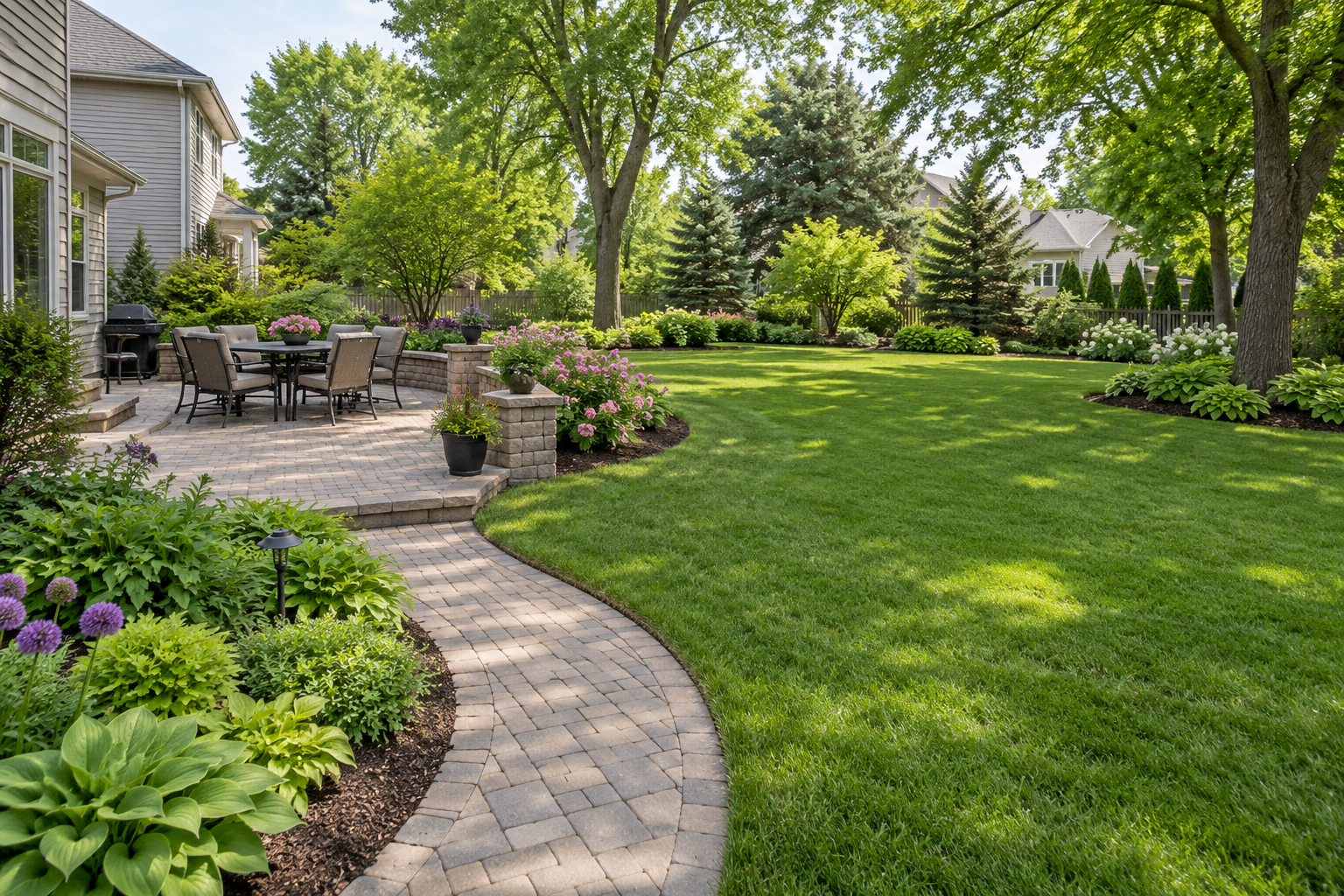
If mowing day always includes awkward corners, narrow side yards, worn paths, and patches of grass no one uses, you may not need a better lawn care routine. You may simply have more lawn than your household needs. Reducing lawn size with hardscaping can turn those frustrating areas into patios, walkways, seating spaces, or defined planting beds. The goal is not to cover the entire yard with pavement. We want to preserve the grass you use while replacing difficult or wasted sections with features that serve a clear purpose. For Appleton homeowners, a good low-mow plan balances outdoor living, drainage, shade, plant health, winter care, and the character of the yard. Here is how we help you decide which areas are worth changing and which should remain green.
How Can Strategic Hardscaping Reduce the Lawn You Need to Mow?
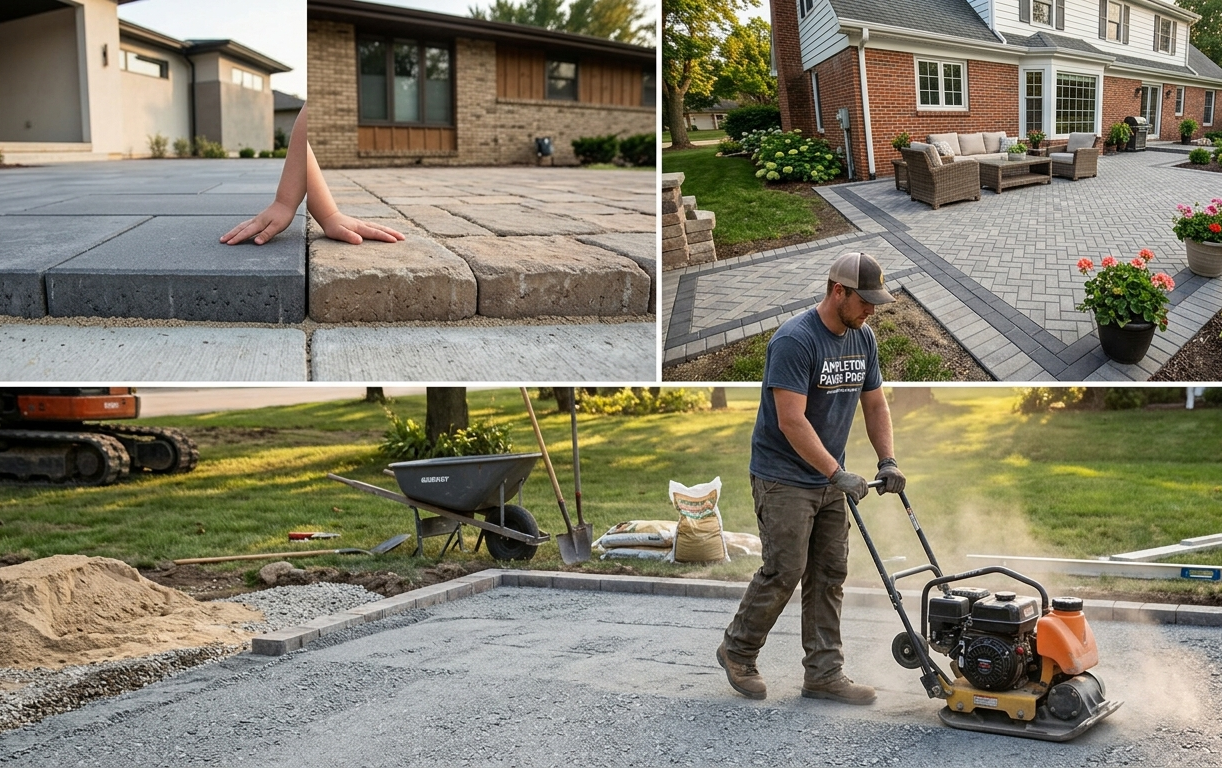
Strategic hardscaping reduces mowing by replacing selected areas of turf with useful features. A worn route can become a walkway, an unused area near the house can become a patio, and an awkward corner can become a planting bed or small seating space. “Low-mow” is a design goal, not a promise that your yard will require no work. It means looking at the property honestly and asking whether every patch of grass still earns its place. We begin with how you use the yard. If you need open grass for children, pets, games, or the appearance you enjoy, we keep it. If a section adds trimming work but provides no real benefit, we look at other options. The layout matters just as much as the amount of lawn removed. Scattered patches of stone can leave the yard feeling broken up. A coordinated design connects the patio, paths, beds, lawn, and house so the entire space feels intentional. You can explore the types of features we build through our hardscaping services.
Which Parts of Your Lawn Are Worth Replacing First?
Start with areas that take time to maintain but provide little value. Narrow strips, tight corners, steep transitions, worn traffic routes, and isolated patches around structures are often strong candidates. A strip between a fence and the house may be too narrow for comfortable mowing. Grass along a busy route may repeatedly thin out or turn muddy. A small patch surrounded by pavement may require extra trimming without offering enough space for play or relaxation. Shade deserves a closer look. Hardscaping is one option, but it is not the only answer. A shaded area can sometimes support suitable groundcovers, mulch, or a defined planting bed. The University of Wisconsin-Madison Division of Extension explains that groundcovers can replace turfgrass in some shaded or difficult locations. It also notes that groundcovers still need care and that most do not handle heavy foot traffic well. Before replacing struggling grass, we look at why it is failing. Shade, compacted soil, drainage, heavy traffic, and the wrong type of turf call for different solutions. Covering a wet area with pavers will not fix the source of the water.
How Do Patios, Paths, and Seating Areas Create Useful Space?
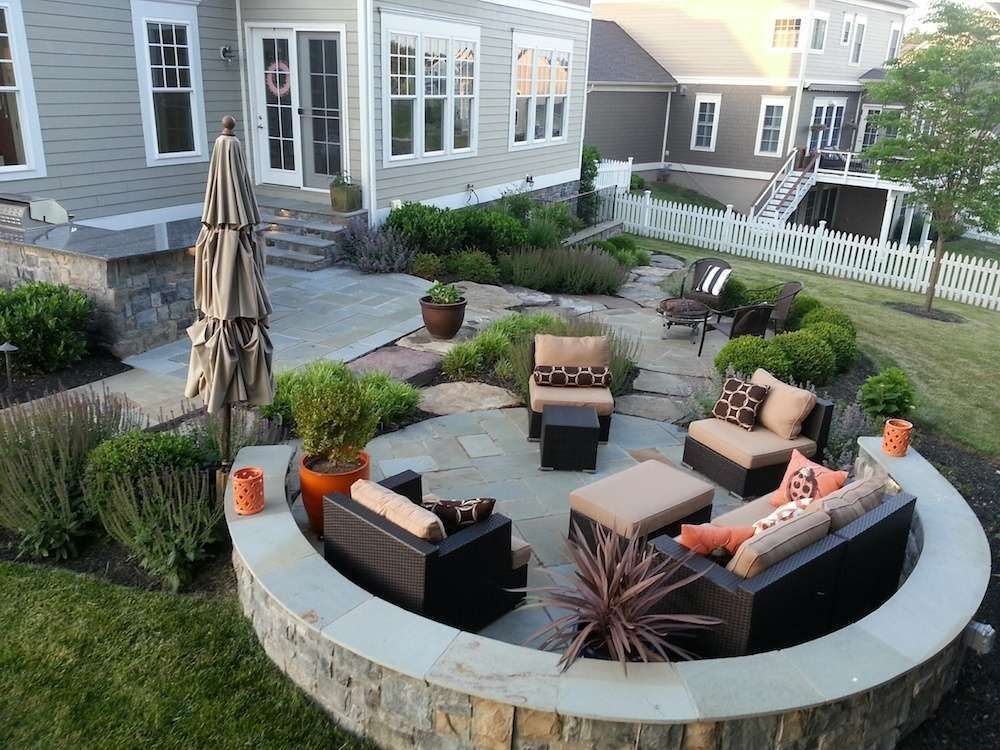
Patios, paths, and seating areas work best when they replace grass with something your household will actually use. A patio can support dining, grilling, conversation, or quiet time outdoors. A walkway can connect doors, gardens, driveways, and gathering spaces without creating a worn path through the lawn. The feature should be sized for its job. A patio that looks large enough while empty can feel crowded after you add a table, chairs, grill, and planters. An oversized patio can take away more green space than you need and increase the amount of runoff that must be managed. We think about chairs being pulled out, doors opening, people carrying food, and guests moving around one another. Those practical details help us choose a useful footprint instead of relying on a rough square-footage goal. If your current concrete slab feels too small, our guide to expanding a builder-grade patio explains what to consider before adding more surface. Paths can also make the yard easier to understand. They direct people toward the patio, garden, shed, or side gate while protecting nearby grass and plantings. Material choice should reflect foot traffic, snow removal, accessibility, drainage, and the look of the home.
How Can Planting Beds and Remaining Lawn Balance the Design?
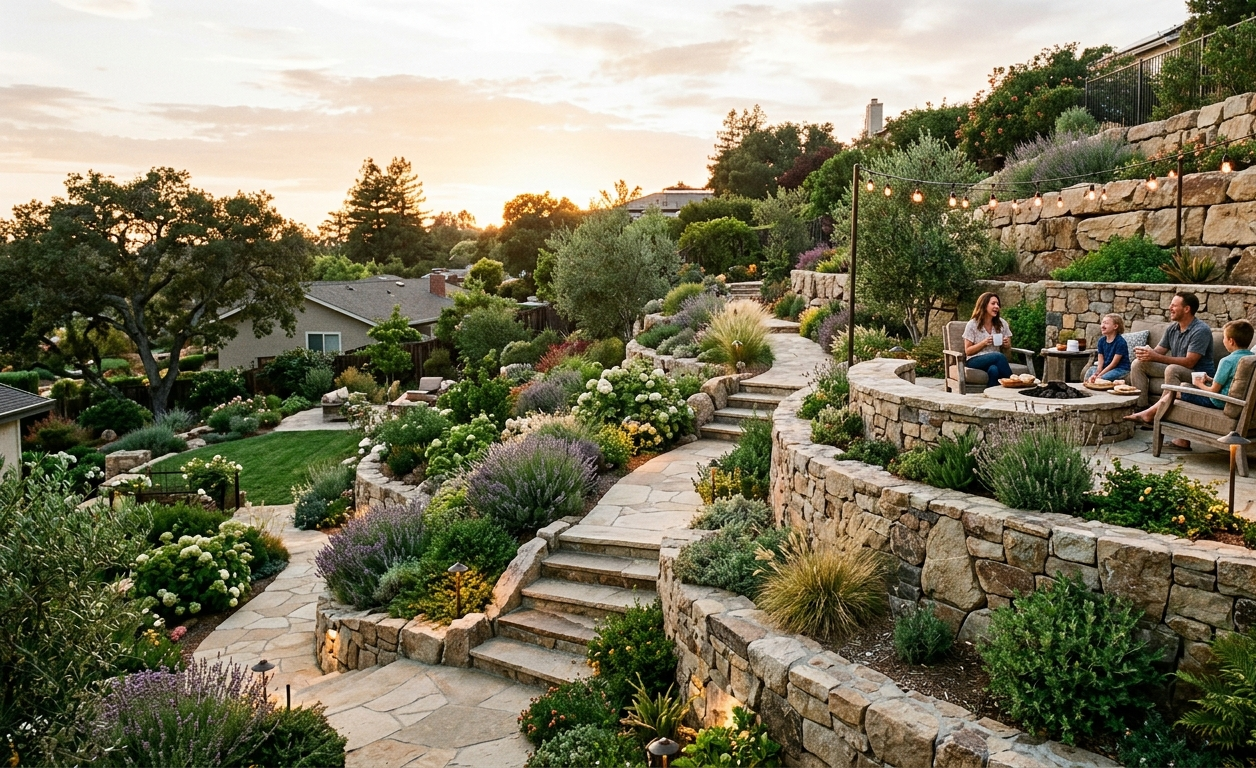
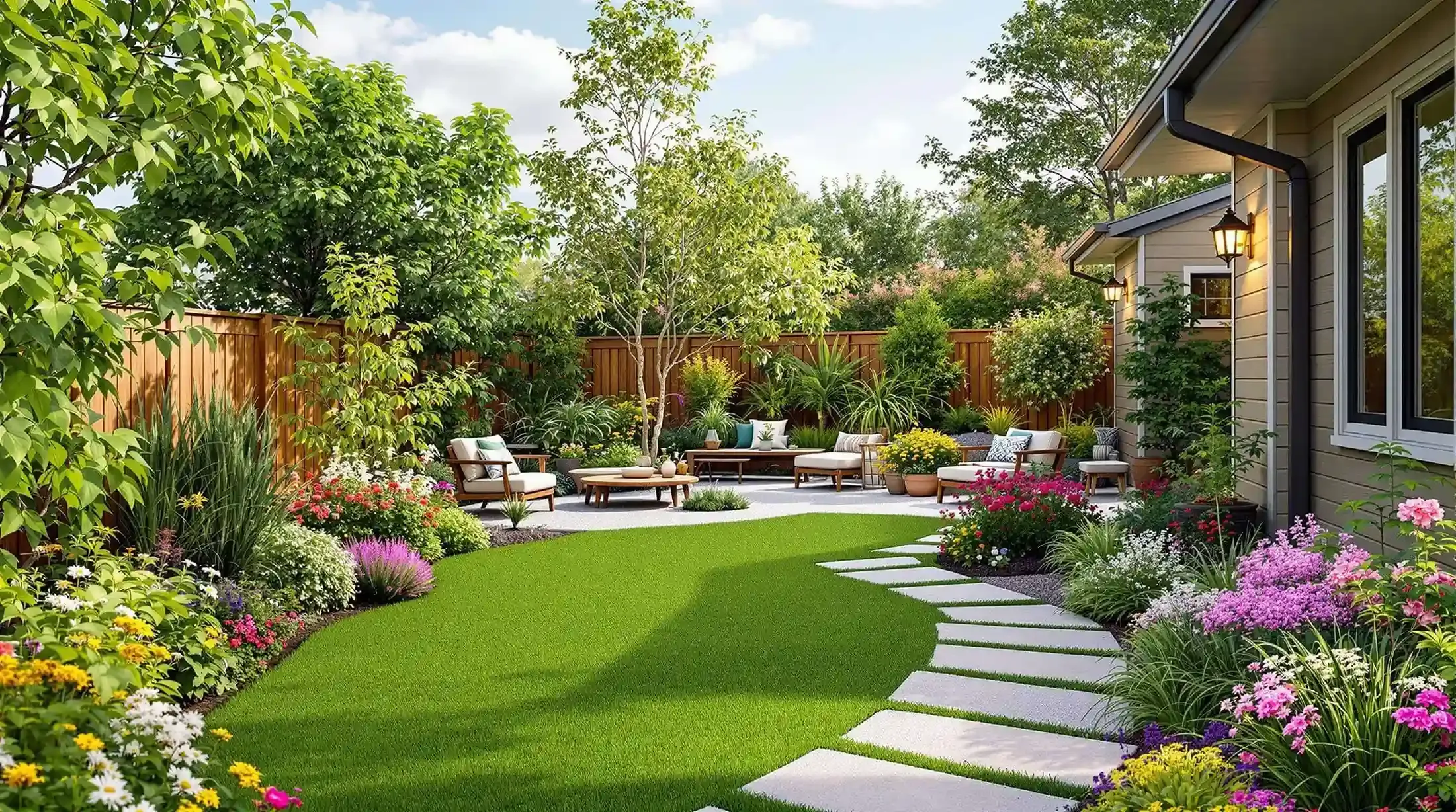
Planting beds soften patios and walkways while creating a natural transition back to the lawn. They can also provide privacy, seasonal color, shade, and a better use for areas where mowing is inconvenient. We do not recommend turning every open space into a crowded garden. Planting beds still need care, especially while they become established. Watering, mulching, weeding, pruning, and seasonal cleanup remain part of the plan. Plant choices should fit the amount of sunlight, soil moisture, mature size, and level of care you are comfortable providing. The plants should also have enough room to grow without blocking paths or leaning over seating areas. Existing trees require special attention. Digging, changing the grade, or driving equipment over the root zone can damage a healthy tree. We plan around important trees instead of treating the ground beneath them as empty construction space. The lawn that remains should have a clear purpose. One open, easy-to-mow area is usually more useful than several disconnected strips. Our landscaping services can help coordinate lawn, planting beds, trees, and hardscape as one design.
What Should Appleton Homeowners Consider About Drainage?
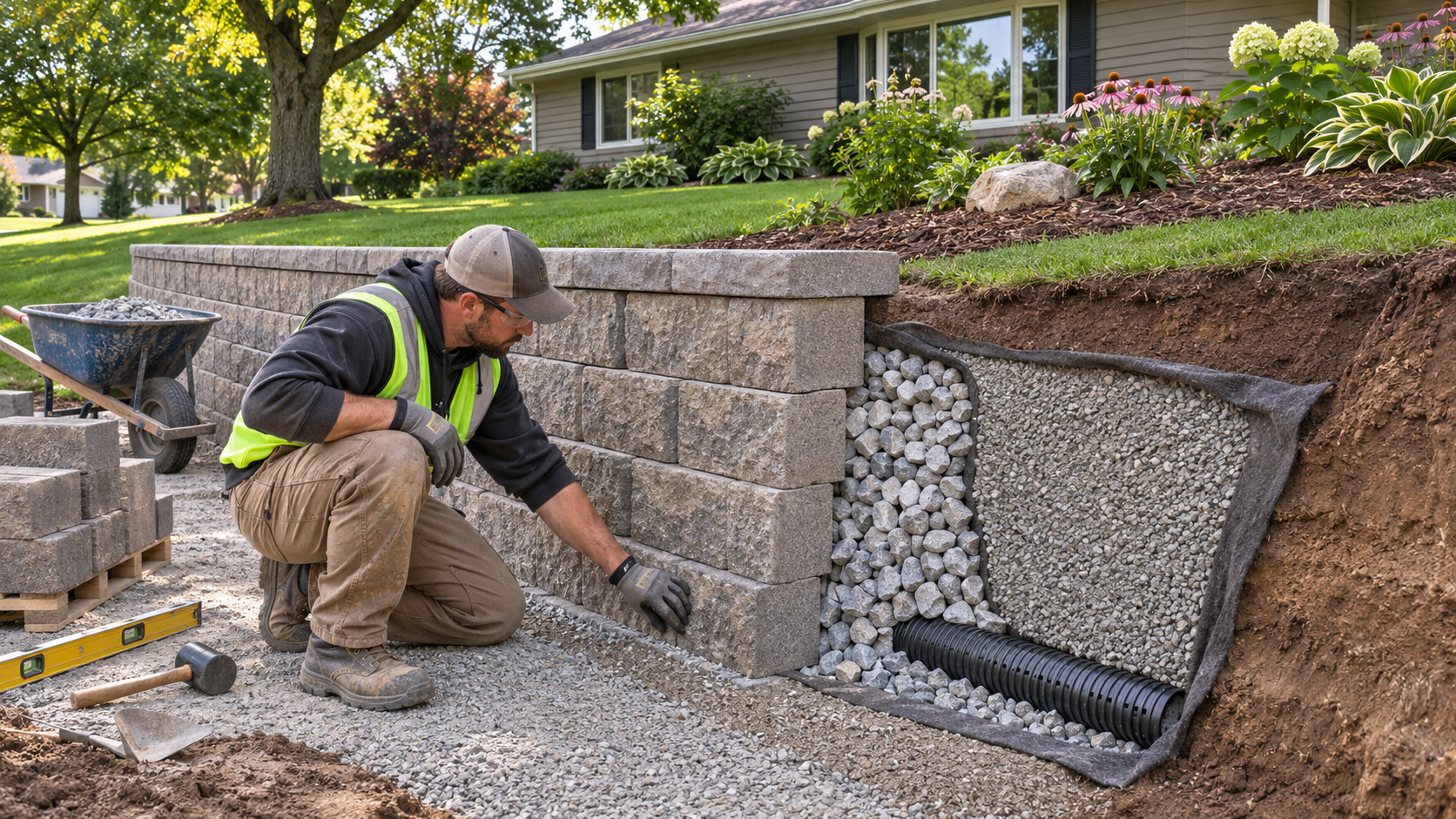
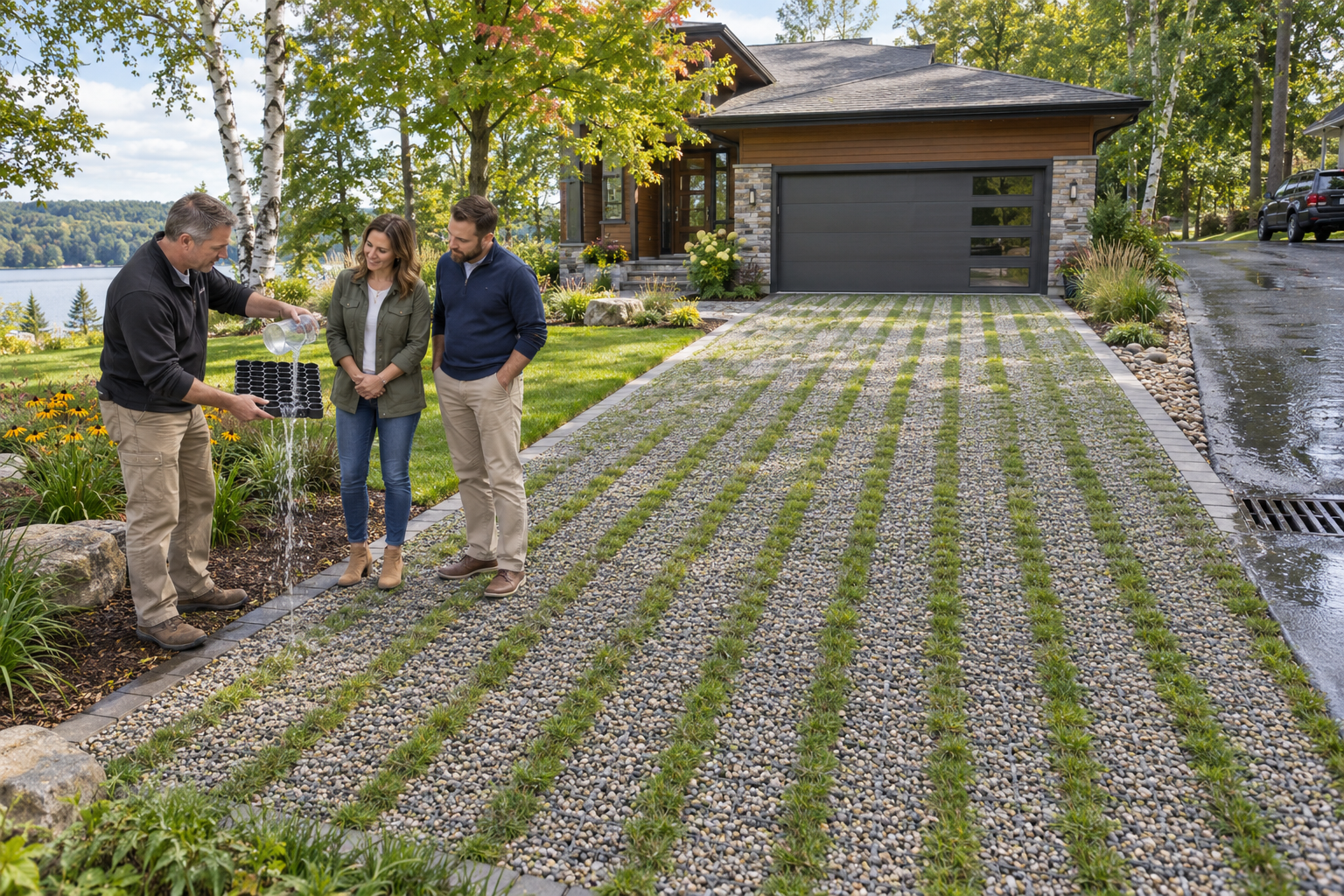
Adding a patio or walkway changes how water moves through the yard. A conventional hard surface can reduce the amount of rain that soaks into the ground where it lands, so the design needs a safe route for runoff. We look at downspouts, slopes, low spots, soil, existing drainage paths, and the location of the house. The goal is to keep water from collecting against structures, washing out planting beds, or being pushed onto neighboring property. No single drainage detail works for every Appleton yard. Soil, elevation, surface size, and available outlets vary from one property to another. That is why we evaluate the site instead of assuming every patio needs the same base or drainage setup. Permeable pavers can help in the right setting, but they are not ordinary pavers with larger gaps. The EPA’s permeable-pavement guidance explains that these systems allow rain and melting snow to pass through the surface into layers of soil and gravel below. For that process to work, the entire system must be designed correctly. The pavers, joints, aggregate, soil, drainage, and maintenance all matter. Where the soil cannot absorb water fast enough, the system may need another way to manage or release it. Our article about permeable grid driveways explains these drainage principles in more detail. Although a driveway handles different loads from a patio, both projects need a complete system beneath the visible surface.
Is a Low-Mow Backyard Also Low Maintenance?
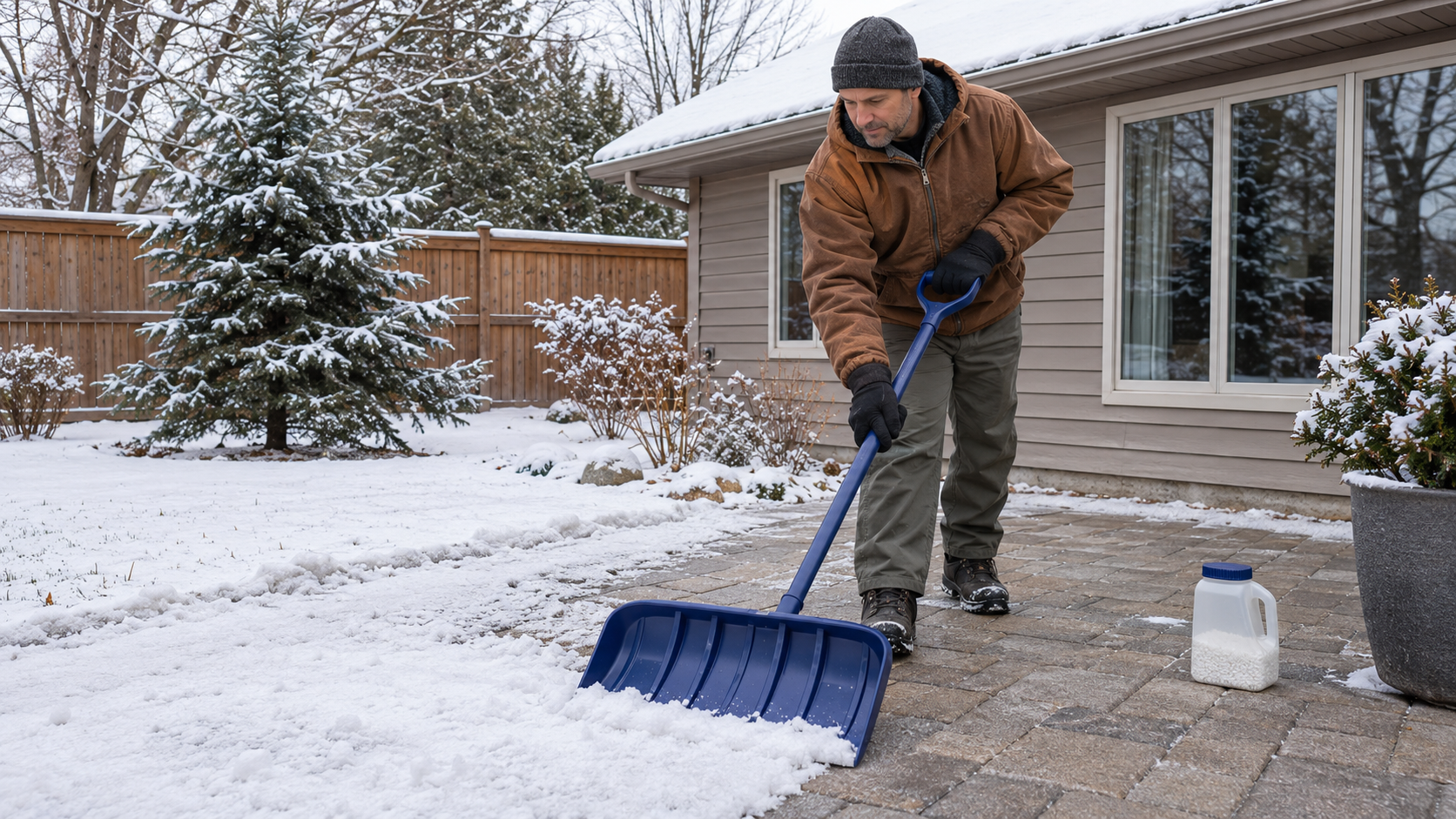
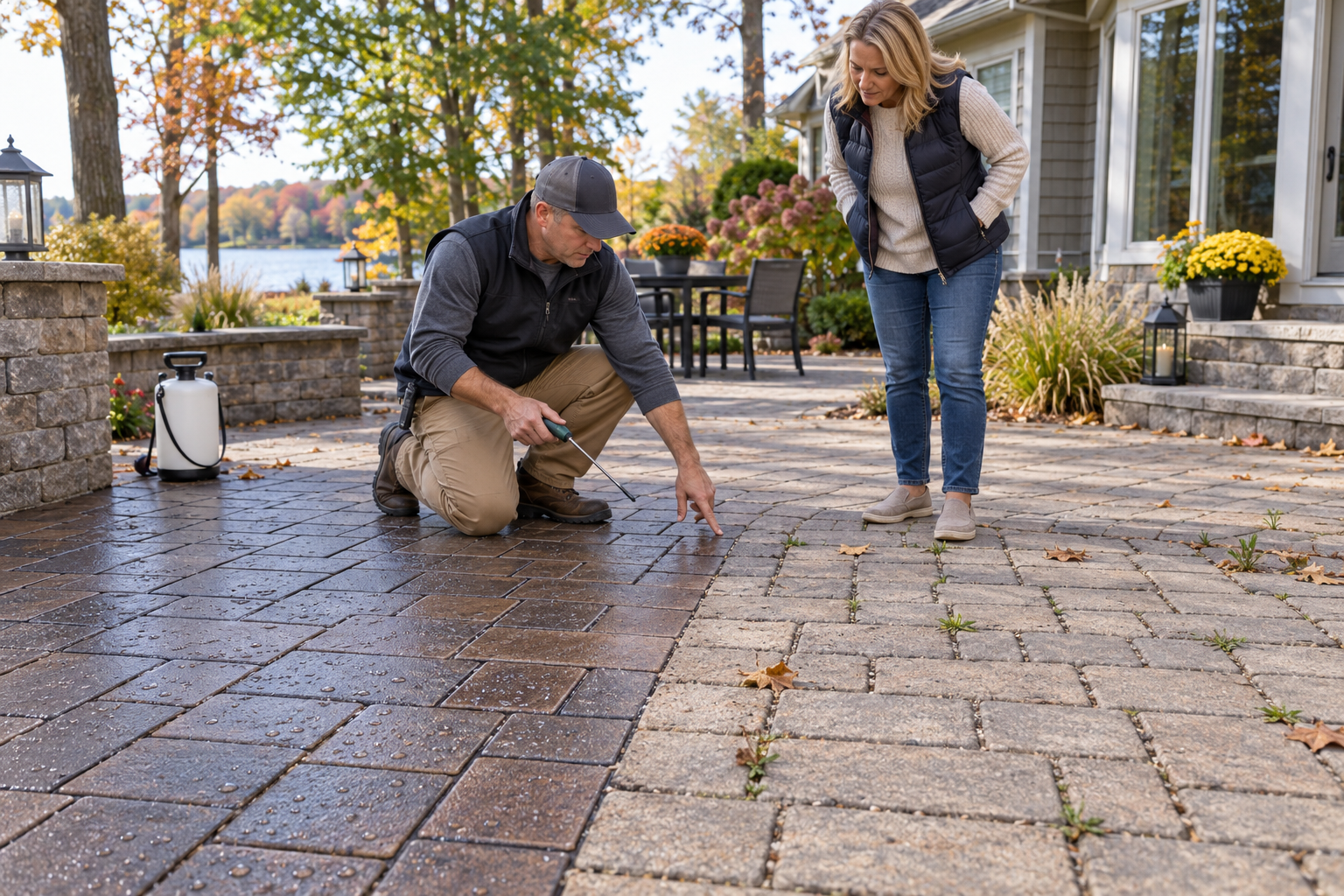
A low-mow yard can reduce lawn work, but it will not eliminate maintenance. The work simply changes. Patios and walkways need sweeping, leaf removal, stain cleanup, and occasional attention to joints or edges. Organic debris should not be allowed to break down in paver joints or block drainage openings. Small repairs are easier to address before movement or joint loss spreads. Planting beds need care as well. Mulch settles, weeds appear, and shrubs or perennials may need trimming. Even established groundcovers can spread beyond their intended area and require edging. Winter should be part of the design from the beginning. You need room to shovel or use a snowblower, and you need a sensible place to store snow. We also consider where the meltwater will go in spring. Reducing lawn can cut back on mowing, trimming, fertilizing, and turf repair. Still, it is worth comparing those savings with the cleaning, plant care, snow removal, and repairs required by the new features. The best plan reduces the chores you dislike without replacing them with work you did not expect.
How Can You Start Small Without Creating a Disconnected Yard?
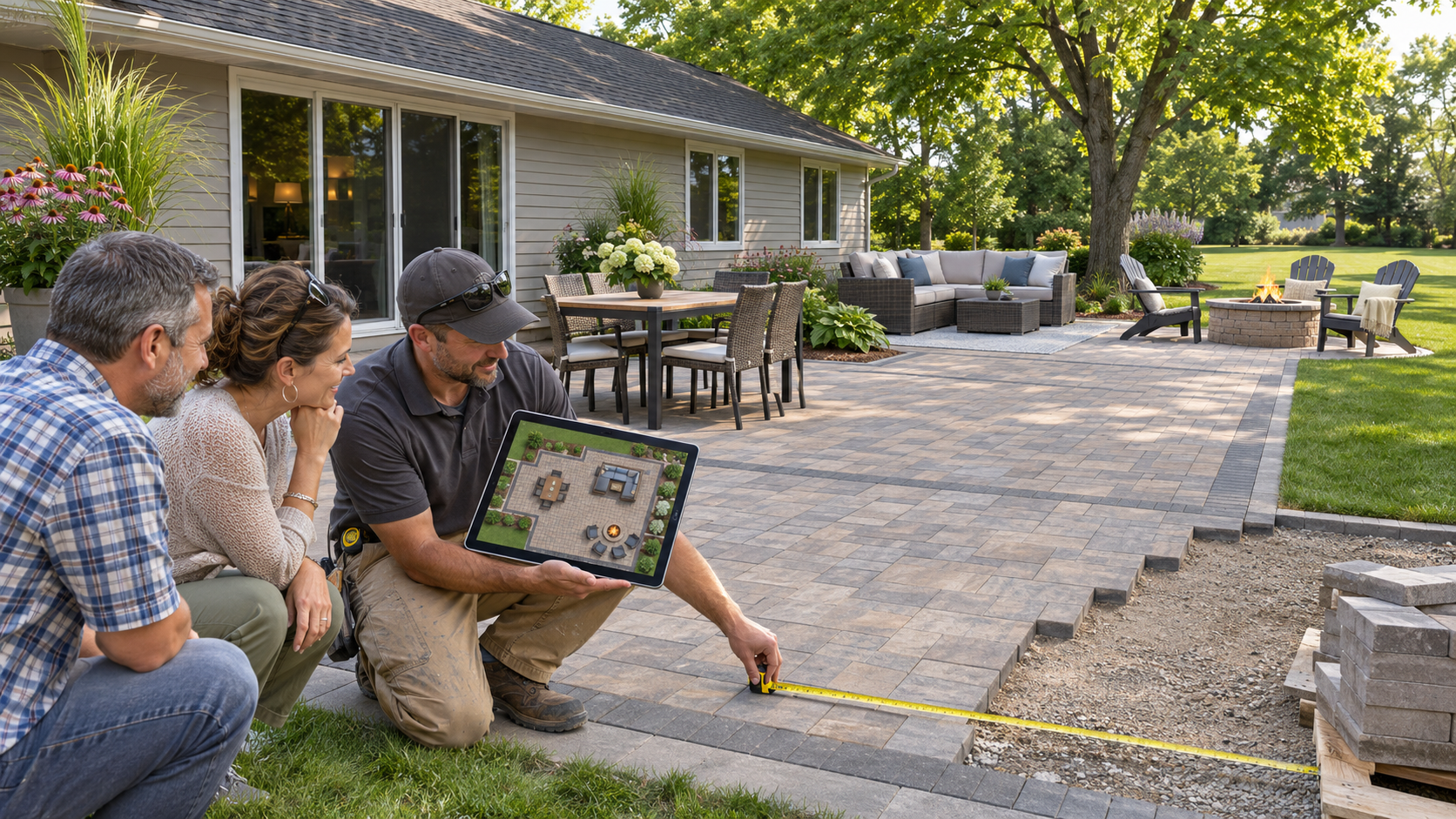
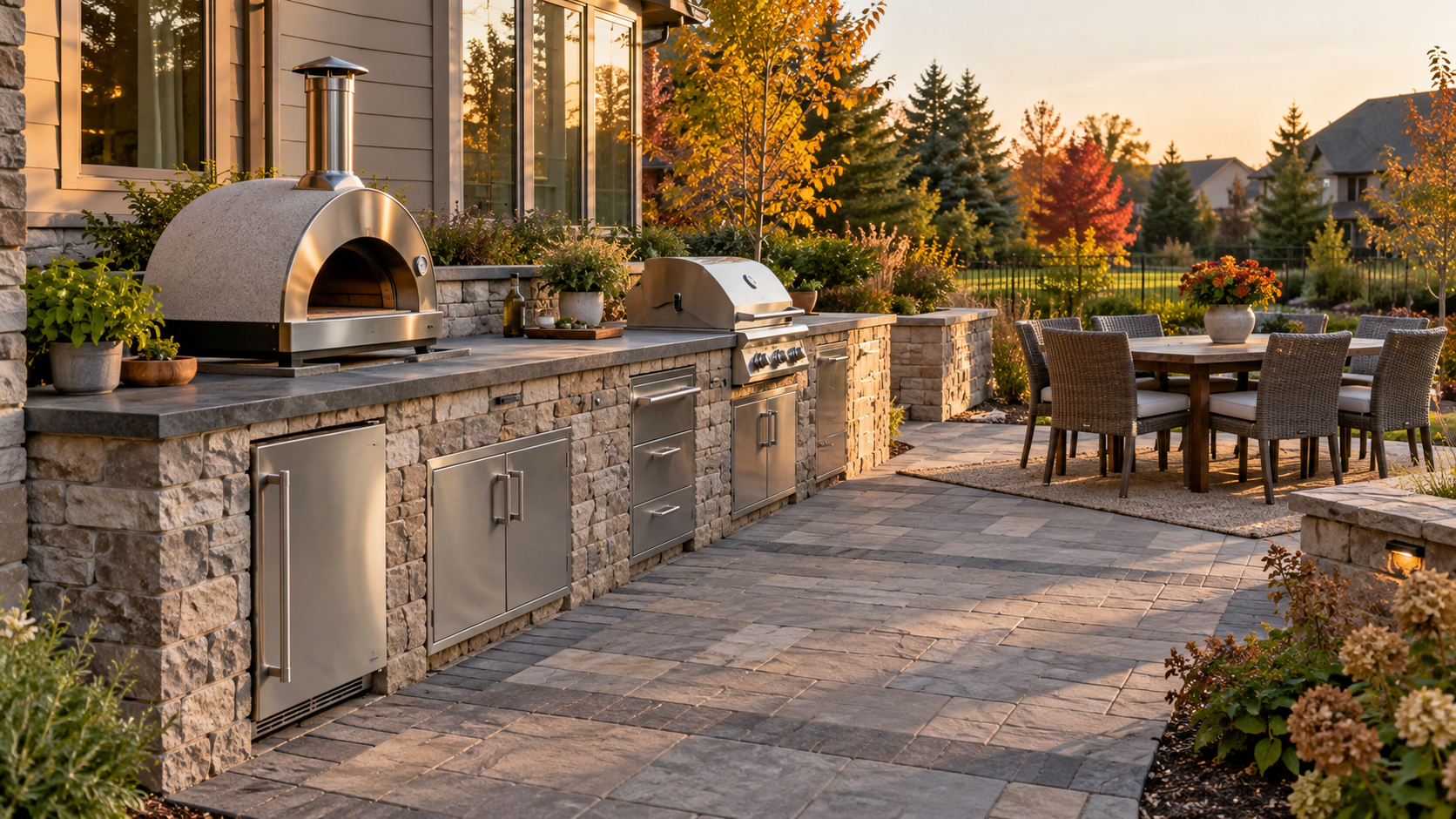
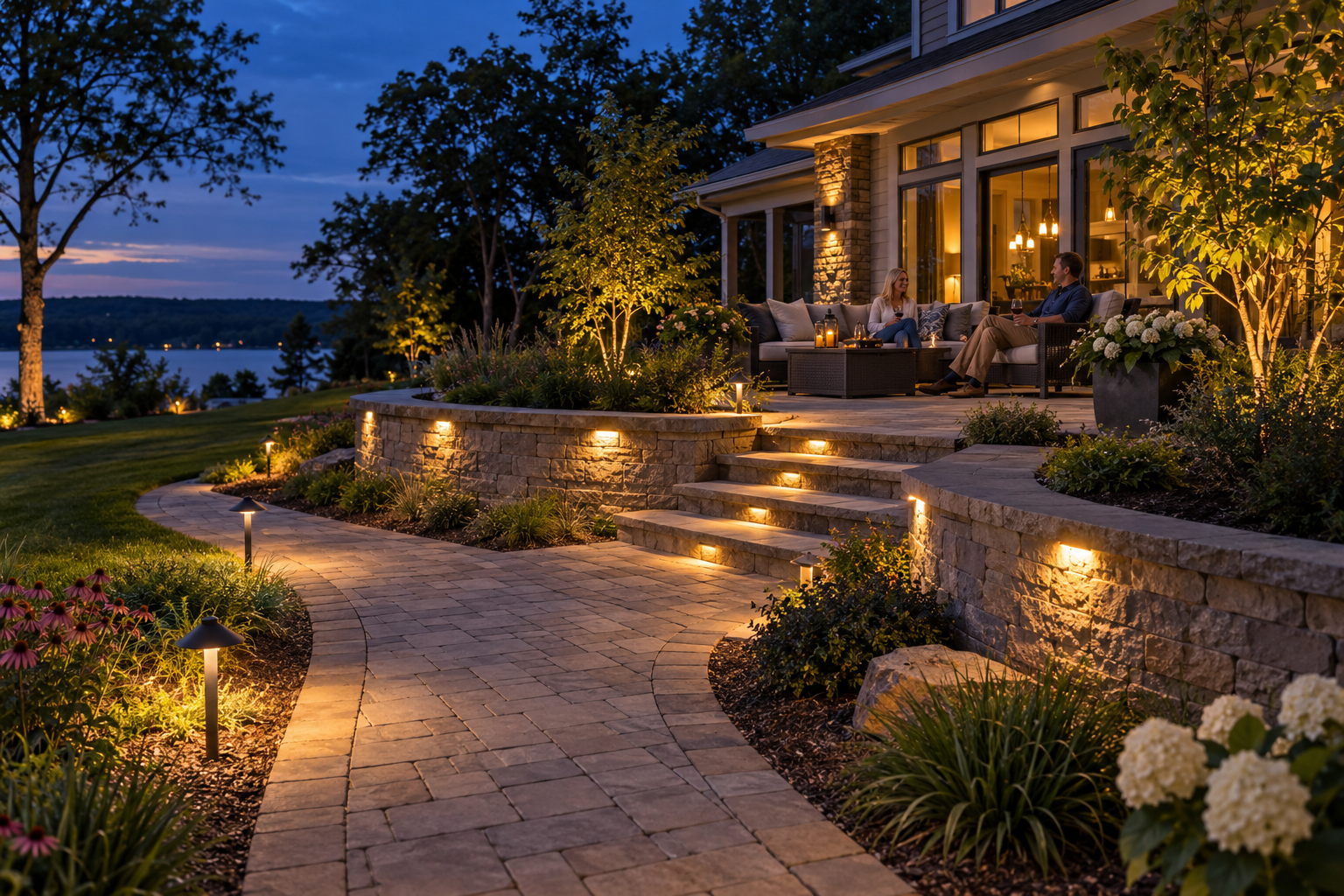
You can start with one priority area as long as it fits into a larger plan. A first phase might include a walkway, a compact seating area, or a planting bed that replaces an awkward lawn corner. Before we build that first phase, we look ahead. Where might a larger patio, outdoor kitchen, fire feature, lighting system, or retaining wall go later? Will construction equipment still be able to reach that area? Will the first phase establish an elevation that makes the next phase harder? Materials do not have to match perfectly, but repeating colors, textures, borders, or shapes can tie separate projects together. This keeps phased work from looking like unrelated pieces added over time. A scaled plan or 3D rendering can help you see how the final yard will work, even if you are not building everything at once. Our article about using 3D rendering for hardscape planning explains how a visual plan can help you review size, furniture, movement, and connections before construction. Excavation also requires utility planning. Wisconsin Diggers Hotline tells homeowners to contact the service before digging, even for small or shallow projects. Public utility markings may not cover privately owned lines, so lighting, irrigation, propane, or lines serving detached structures may need separate locating.
Does Reducing Lawn Automatically Make a Yard More Environmentally Friendly?
No. Replacing grass with hardscape is not automatically greener, cooler, cheaper, or better for the property. Large paved areas can increase runoff and absorb heat. Removing too much vegetation can reduce shade and take away habitat used by birds, insects, and other wildlife. Hardscape materials also have manufacturing, transportation, and installation impacts. A balanced design usually works better. You might combine a right-sized patio, direct connecting paths, preserved trees, useful lawn, and planting beds chosen for the site. Permeable systems, rain gardens, or other drainage features can also be considered where the property supports them. We use “low-mow” to describe a yard with less grass to cut, not a universal environmental claim. The goal is to make the yard work better while respecting drainage, trees, shade, planting, and the amount of open space you enjoy.
Why Choose Urban Renovations for Hardscaping in Appleton?
We are locally owned, fully insured, and a Unilock Authorized Contractor with more than a decade of hardscaping experience. We help you turn difficult or underused areas into outdoor spaces that fit the way you live. Our work goes beyond choosing a paver color. We look at how you move through the yard, where water travels, which lawn areas you want to keep, and how the patio or walkway will connect with plants, trees, and future improvements. Our Unilock Authorized Contractor status gives us access to product and installation knowledge for relevant paver projects. It does not mean every project must use the same product or carry the same warranty. We will explain the materials and written warranty terms that apply to your specific project. Most importantly, we will not suggest paving more of your yard simply because there is room. We want each feature to have a purpose and the finished landscape to retain enough greenery for your family, pets, and preferences.
Frequently Asked Questions
How much lawn should I replace with hardscaping?
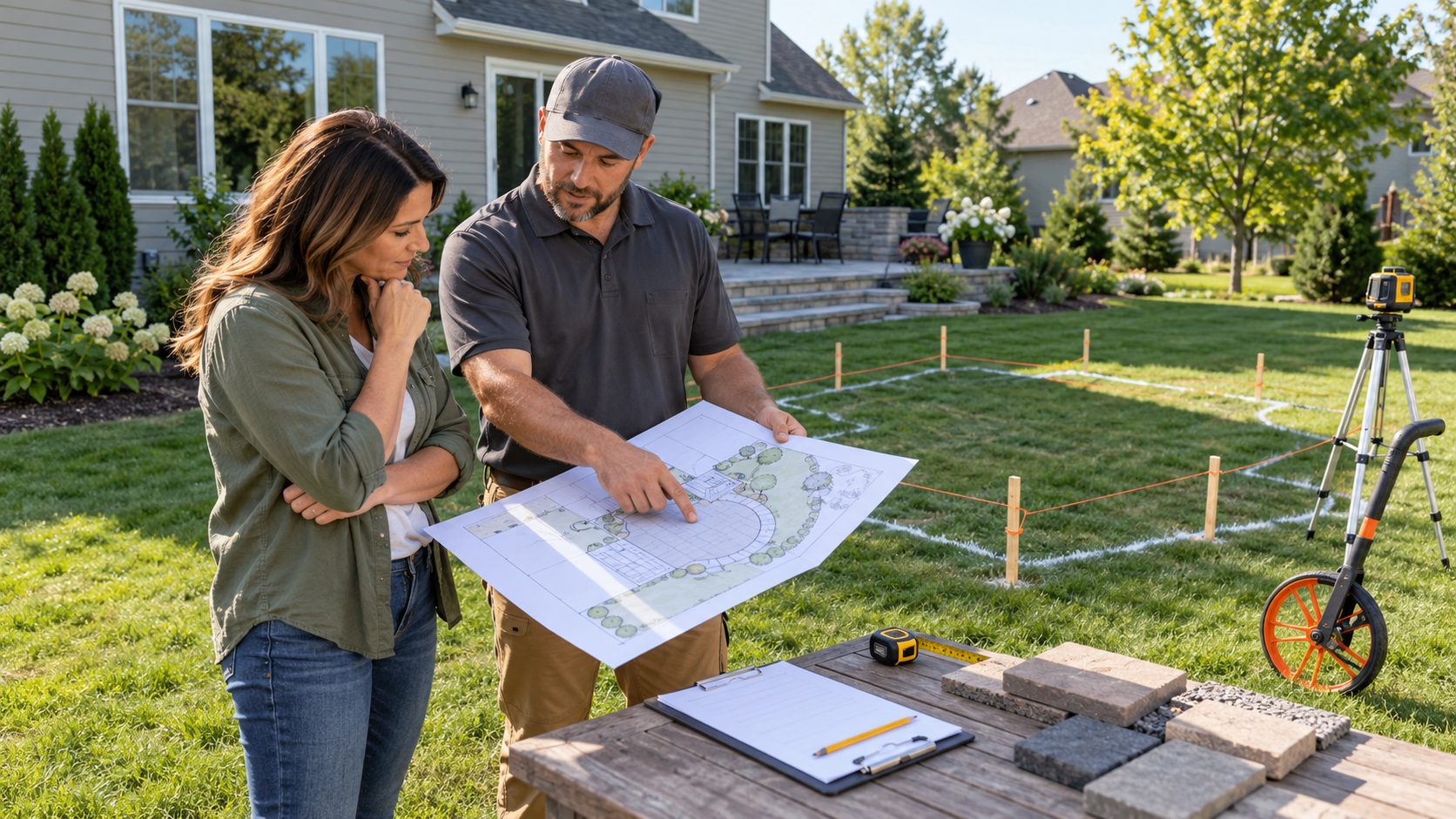
There is no ideal percentage of lawn to replace because the right amount depends on how your household uses the property. Begin by preserving enough grass for pets, children, recreation, gardening, and the open appearance you enjoy. Then identify narrow strips, awkward corners, worn traffic routes, steep areas, and other sections that are difficult to mow or rarely used. A scaled plan can help you compare patio and walkway sizes without overbuilding. It should also show planting areas, mature trees, drainage routes, shade, and remaining lawn. The final design should provide enough hardscape for its intended purpose while retaining useful greenery and allowing water to move safely across the property.
Can hardscaping fix a wet or muddy section of lawn?
Hardscaping may create a cleaner, more stable route through a wet or muddy area, but it does not automatically correct the source of the moisture. The problem could involve poor grading, compacted soil, downspout discharge, groundwater, runoff from another surface, or an inadequate drainage outlet. Covering the area without investigating these conditions may redirect water, trap moisture beneath the installation, or create a new problem elsewhere. The site should be evaluated during wet conditions when possible so the design accounts for where water enters, collects, and leaves. Drainage, base preparation, grading, and the finished surface should work together instead of using pavers merely to hide persistent moisture.
Are permeable pavers better than regular pavers for a low-mow yard?
Permeable pavers may help manage runoff when they are installed as part of a complete system designed for the property, but they are not automatically better than conventional pavers. Their performance depends on the surface units, joint material, open-graded aggregate layers, soil infiltration, drainage design, installation, and continued maintenance. Conventional pavers may be appropriate when runoff is graded toward a safe, approved destination through another planned method. A site assessment should consider soil, slope, groundwater, nearby foundations, winter conditions, sediment exposure, intended use, and applicable requirements. Homeowners should compare both systems based on complete construction and maintenance needs rather than assuming any paver with visible joints is permeable.
What can I use instead of grass in shaded areas?
Shade-tolerant groundcovers, mulched planting beds, paths, and small seating areas can replace grass in some shaded locations, but the right option depends on sunlight, soil moisture, tree roots, drainage, and foot traffic. Most groundcovers cannot withstand the same repeated use as healthy turf or a properly constructed walkway. Existing tree roots must also be protected because excavation, equipment, added soil, and changes in drainage can affect tree health. Before selecting plants, confirm their Wisconsin hardiness, mature spread, moisture preferences, and maintenance requirements. In many yards, a mixed solution works best, such as a defined path for regular traffic surrounded by suitable groundcovers or mulched plantings.
Will a low-mow landscape save money over time?
A low-mow landscape may reduce mowing, trimming, fertilizing, and turf repair, but it does not guarantee lower total costs. Patios, walkways, drainage improvements, planting beds, and properly prepared bases involve upfront expenses. Hardscape surfaces may later require cleaning, joint maintenance, or localized repair, while plantings can require watering, pruning, weeding, mulching, and seasonal cleanup. Winter care and snow removal should also be included in the comparison. Consider the complete cost of installation and ownership alongside the value of gaining a more useful outdoor space. The best reason to reduce lawn is usually improved function and manageable maintenance, not an assumed payback period or guaranteed long-term savings.
Create a Yard With Less Mowing and More Purpose
Reducing lawn size works best when every new feature earns its place. A well-planned patio, path, seating area, or planting bed can replace difficult turf while preserving the green space your household actually uses.
To explore strategic hardscaping for your Appleton property, contact Urban Renovations or call 920-250-8075. We can discuss your layout, drainage, maintenance preferences, and ideas for creating a more practical outdoor space.
Follow our social media pages below:
About Urban Renovations
Urban Renovations is Central Wisconsin’s one stop team for hardscaping and landscaping, built around clean craftsmanship and a smooth experience from start to finish. They handle everything from paver patios, retaining walls, pergolas, and outdoor kitchens to grading, lawn installation, planting, and drainage that keeps your yard looking right and working right. Their 3D design process helps homeowners see the plan before work begins, so decisions feel confident and surprises stay off the jobsite. From the first conversation to the final walkthrough, their crew keeps communication clear, timelines realistic, and results built to last.

Ready to transform your outdoor space?
Trusted Local Team • Design and Build • Licensed and Insured • Year Round Service
From paver patios and retaining walls to new lawns and land clearing, we help Appleton homeowners get it done right. Call 920-250-8075 or submit the form below to get started.
Contact Us
Ready to Upgrade Your Outdoor Space?
If you are thinking about a new patio, retaining wall, pergola, or a fresh lawn install, our team is here to help you plan it right and build it to last. Reach out to Urban Renovations to talk through your goals, get expert guidance, and take the next step toward a clean, functional outdoor space you will enjoy for years.
Follow Us
Get A Free Quote Today!